
UK hair transplant tourism to Turkey since 2020: What is driving demand, and what remains uncertain?

If you are weighing a Turkish hair transplant package against UK treatment, the first thing worth knowing is this: the trend is highly visible, but it is poorly measured.
Advertising, social media content and word of mouth all suggest that large numbers of British adults have travelled to Istanbul and other Turkish cities for hair restoration since pandemic travel restrictions eased. What no publicly available dataset appears to provide is a reliable, dated count of how many UK residents had a hair transplant in Turkey in any given year, according to MedArt Hair.
They say that gap matters, because it means prospective patients are often making a significant medical decision using commercial marketing material as their main evidence base.
This analysis separates what can reasonably be observed from what is interpretation, and flags where the numbers simply are not there.
Defining the trend, the timeframe and the geography
The trend under discussion is cross-border travel by UK residents to Turkey — overwhelmingly to Istanbul, though other cities market similar services — for surgical hair restoration, principally follicular unit extraction (FUE) and its variants, including direct hair implantation (DHI) and so-called "sapphire" blade techniques. These are surgical procedures involving the removal of hair follicles from a donor area and their implantation into thinning or bald regions.
The timeframe runs from 2020 to the present. It has two distinct phases. The first is the COVID-19 interruption, when international leisure and elective medical travel was heavily restricted. The second is the recovery and expansion of marketed treatment packages — typically bundling the procedure with hotel accommodation, airport transfers, medication and an interpreter — alongside intensive promotion on Instagram, TikTok, YouTube and search advertising.
An important caution: a post-2020 rebound in any travel category is partly a recovery from an artificially suppressed baseline. Growth measured from 2020 or 2021 will look dramatic for reasons that have nothing to do with underlying demand for hair surgery.
What the evidence can and cannot show, according to MedArt Hair
No authoritative dataset supplied for this article establishes a UK-to-Turkey hair transplant procedure count, a growth rate or a market size, so none is stated here. Readers should be sceptical of any article that quotes a precise figure without naming the source, the year and the method.
Where would credible evidence come from? Several bodies publish data that is relevant, though each has limits:
● UK Office for National Statistics travel survey – Shows volume and stated purpose of UK visits abroad, but is survey-based; medical treatment categories do not identify procedure type
● Civil Aviation Authority and airport passenger statistics – Shows route-level passenger volumes on UK–Turkey services, but whilst it captures all travel purposes it does not record treatments.
● Turkish official tourism and health-tourism bodies – Shows health tourism arrivals and nationality breakdowns, but definitions of "health tourism" vary; procedure-level detail is often absent
● Peer-reviewed clinical literature – Shows case series and complication reports relating to cross-border hair restoration but usually small samples, often drawn from patients who sought help after problems
● Professional bodies and regulators – Shows dated guidance and documented concerns but guidance is not a measure of prevalence
Readers who want to check the position for themselves can consult: The NHS, the Foreign, Commonwealth & Development Office, the General Medical Council, the Care Quality Commission, the British Association of Hair Restoration Surgery, the British Association of Aesthetic Plastic Surgeons and the International Society of Hair Restoration Surgery, as well as the relevant Turkish health authorities. And they should check the publication date of anything they rely on.
Clinic-supplied material sits in a different evidential category altogether. Patient counts, satisfaction rates, testimonials, booking volumes and photo galleries are commercial or self-reported evidence. They may well be accurate, but they are not independently audited, they rarely disclose sample size or how cases were selected, and they seldom separate UK patients from other nationalities.
Plausible drivers — an interpretation, not a proof
Several factors are commonly offered to explain the pattern. They are plausible and mutually reinforcing, but they are explanations rather than measured causes.
Headline price differences. Turkish package pricing is typically advertised well below comparable UK private pricing, and the gap is the single most cited reason patients consider travelling. However, quotes are structured differently: some are flat packages, others are priced per graft, and the number of grafts a patient actually needs is a clinical judgement. Marketing pages built around the best hair transplant in turkey price should be read as commercial material and compared like for like — what is included, what triggers an extra charge, and what happens if a second session is required.
Bundling and convenience. Combining surgery, transfers and accommodation compresses a complex decision into a single purchase, which shortens the research journey. A shorter journey is efficient, but it can also compress the time available for consent, questions and second opinions.
Clinic density and capacity. Istanbul hosts a large concentration of providers competing for international patients, which supports both price competition and heavy marketing spend. A search for a hair transplant istanbul package will return a crowded field in which clinical standards, surgeon involvement and aftercare provision can differ substantially between providers at similar prices.
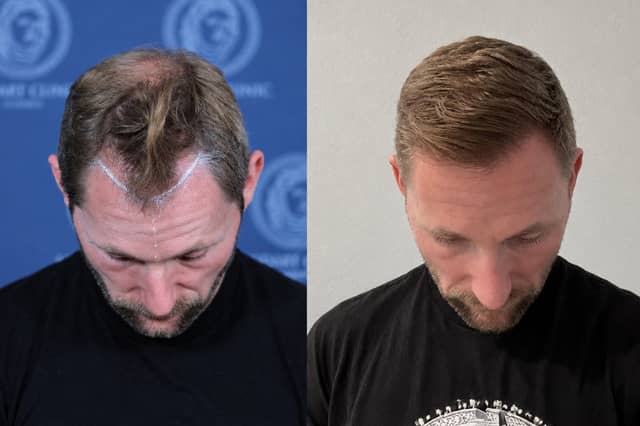
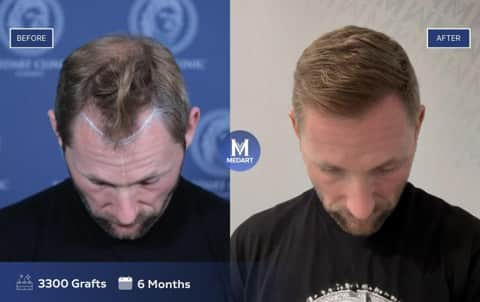
Visual social proof. Before-and-after imagery is persuasive precisely because it is concrete. But a published Hair Transplant Turkey Before & After gallery is curated promotional content, not a representative outcome sample. Lighting, hair length, styling, camera angle and the interval since surgery all affect appearance, and unsuccessful cases are unlikely to appear.
Limited UK provision on the NHS. Hair loss treatment is generally regarded as cosmetic and not routinely funded, pushing the decision entirely into the private market in both countries.
Counterevidence and necessary nuance
The trend is frequently framed as a cautionary tale, and that framing can be as misleading as uncritical promotion. Several points cut the other way.
Many patients report satisfactory outcomes, and overseas care is not inherently inferior to domestic care. Standards within Turkey vary widely — the country has highly qualified hair restoration surgeons as well as operators where the extent of medical supervision is less clear — and general industry warning signs should not be treated as findings about any specific named clinic. Equally, price alone is a poor proxy for quality in either direction: a higher fee does not guarantee surgeon-performed work, and a lower fee does not prove poor standards.
Conversely, the specific risks of cross-border surgery are structural rather than hypothetical: follow-up appointments are harder to attend, complications usually present after the patient has flown home, and routes to legal redress differ from those available in the UK.
Who is affected?
Prospective patients bear the clinical and financial risk. UK clinicians — GPs, dermatologists and private surgeons — may be asked to manage post-operative concerns for procedures they did not perform and have no records for. Reputable Turkish providers are affected too, since sector-wide criticism can obscure meaningful differences in practice.
Scenarios, not predictions
These are possibilities, not forecasts.
Continuity: Price gaps persist, marketing intensity continues and volumes remain broadly stable.
Consolidation and formalisation: Tighter accreditation, clearer disclosure of who performs surgery, and more structured aftercare agreements.
Contraction: Currency movements, regulatory change or sustained negative reporting narrow the perceived advantage. Which path dominates will depend on regulation and exchange rates as much as on patient demand.
Practical implications if you are considering treatment
Verify the named surgeon and the facility with the appropriate regulator rather than relying on a website biography. Ask, in writing, who will perform each stage of the procedure. Obtain a written treatment and aftercare plan, including what happens if growth is poor or a complication arises after you return. Check what your travel insurance covers, and what it excludes for elective surgery abroad.
Most importantly, hair loss has multiple causes, and not everyone is a suitable candidate for surgery. Seek independent medical advice about your individual situation — ideally before, not after, paying a deposit. This article is general information, not medical advice, and cannot assess your suitability for any procedure.
Disclaimer: Always consult your GP or NHS consultant before embarking on any private medical or cosmetic treatments. Ensure you have adequate health and travel insurance to cover treatment abroad and check the UK Foreign, Commonwealth & Development Office (FCDO) and the British Association of Aesthetic Plastic Surgeons (BAAPS) for the latest advice The NHS also provides advice on considering cosmetic surgery abroad via the NHS website.