
Roof repairs underway to help historic Cragside cope with stormy weather
Cragside is racing to future-proof itself against increasingly extreme weather - with a £1.8m roof rescue launched ahead of forecasts of another storm-hit autumn.
The historic stately home near Rothbury, built by engineering pioneer Lord Armstrong in 1863, is undergoing huge repairs after years of scorching summers and stormy winters battered the building.
The sprawling mansion famously became the first house in the world powered by water, using lakes on the estate to generate electricity through a 17m (56ft) turbine - called The Archimedes screw.
But more than 160 years later, it is the power of nature threatening the grand home.
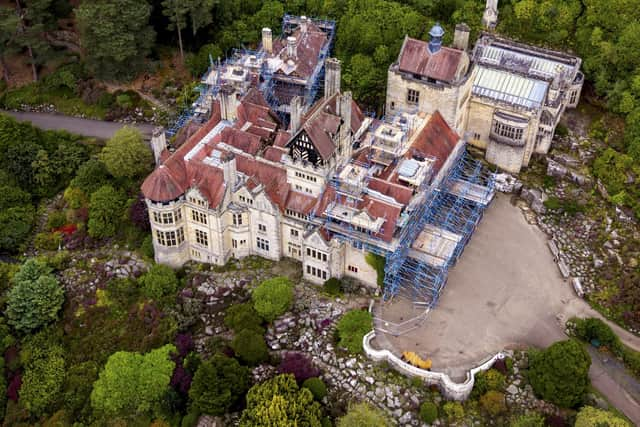

Experts predict a “supersized” El Nino later this year could unleash huge storms and a bitterly cold winter, leaving workers scrambling to fix slipped slate tiles and crumbling render before the weather turns.
An “enormous scaffold” now stretches across the front of the property as part of a major conservation project to repair and renovate the roof.
The National Trust said the house was never designed for today’s “very different” weather patterns.
Property curator Clara Woolford warned the roof was “really vulnerable” to wind damage and torrential rain.
She said: “We've got Victorian-size gutters and we're now getting more water than those gutters can take.
“When we get a heavy downpour, the gutters get overwhelmed.
"Water that is not diverted away then seeps into the building and becomes a problem for our historic interiors and the collection."
As well as urgent repairs to protect the property from this year's autumn and winter weather, intensive restoration work will continue until 2028.
The two-year project will see scaffolding climb to the roof, which stands 85ft (26m) high at its highest point. Work on the free-standing structure will only pause during Cragside’s bat breeding season.
Clara added: “As climate change continues to create more extreme weather patterns, we're having to adapt the house to be able to make sure that it can survive for another 150 years.”
Despite the disruption, the historic attraction will remain open to visitors throughout the work.
The project is being funded by the National Trust alongside grants from the Wolfson Foundation and Sylvia Waddilove Charitable Trust.
And last year conservators made a remarkable discovery when they uncovered graffiti bearing the names of the house’s original joiners, later tracing them through census records.