
Plants to protect from the British winter
November always rings an inner alarm bell telling me that time is running out for a final decision on which tender plants are to be offered warmth indoors.
We’re fully aware of those perennials that cannot withstand the prolonged cold and wet of winter in the garden and can offer immobile subjects either protection in situ with straw, bracken, fleece etc. or, if they’re mobile, a place in the unheated greenhouse which is at least a buffer against wind, hail, sleet and snow.

They are not my real concern. It’s the potted or large container plants that inhabit the greenhouse or a sheltered, sunny spot on the patio during summer and have little chance of survival as the weather closes in.
It is not feasible to accommodate them all in the garden room or house so, the decision boils down to most need and favourites.
For example, we have three pot-grown rubber plants which I rooted from stem cuttings circa ten years ago. But they’re not Ficus elastica ‘Decora’ the tall, large glossy green leaved type that’s so popular.
These are Ficus benjamina ‘Variegata’, which has small, narrow evergreen leaves that are green with white splashes that make the plant so attractive. Growing naturally in sub-tropical regions of the world marks them as unsuitable for the rough and tumble of our weather.
Never-the-less, this summer two lived on the west-facing patio next to the house and one in the garden room which is normally home to all three. Last week I stood them together for growth comparison and saw my first two priority indoor for winter candidates!
A shrubby hibiscus spends its life in the greenhouse where it stands in a large pot but this summer a move outdoors has not been kind to it . Strong winds shredded the leaves and very few flower buds formed. it will return to the unheated greenhouse for winter where it generally survives.
So, what else will follow the rubber plants and streptocarpus to the
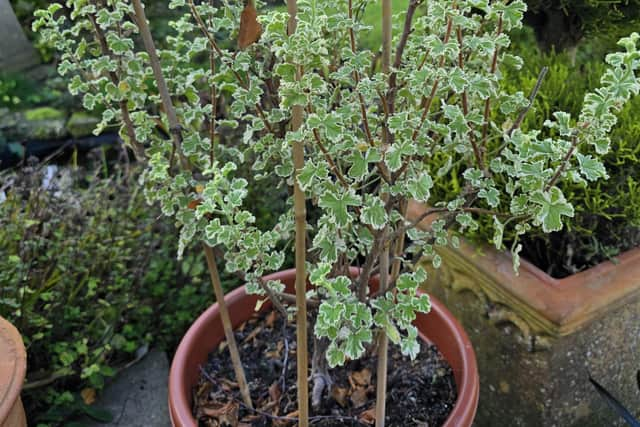
Garden room? Begonia rex, chlorophytum, phalanopsis orchid must because they’re house plants. Lemon verbena (Aloysia) is special for the strong citrus fragrance when leaves are rubbed but it’s deciduous and difficult to keep in winter without warmth. Pelargonium crispum is a variegated plant whose leaves emit a similar agreeable aroma. Both plants would perish in cold conditions so, given their indoor survival they’ll act as stock plants providing stem cuttings for a new generation next year.