
Education bosses in Northumberland admit ‘more to do’ on school attendance after Covid drop
School attendance in Northumberland remains low due to the after-effects of the Covid crisis more than six years after the pandemic began.
While attendance rates are now recovering, Northumberland at 91.7% continues to lag behind the national rate of 93.1%.
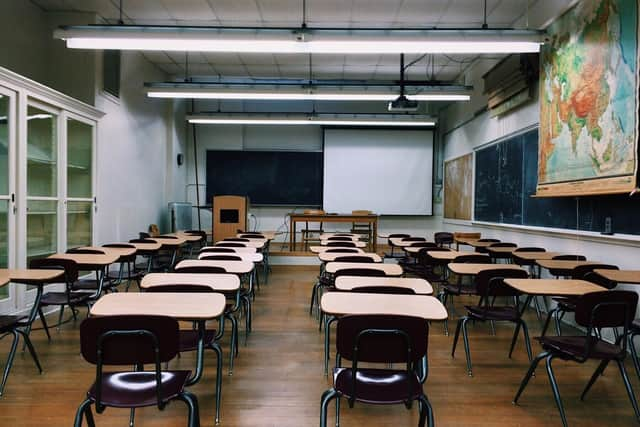

At the council’s family and children’s services scrutiny committee, education officers admitted there was still work to do to get attendances back to their ideal levels.
Cllr Guy Renner-Thompson, cabinet member for education, said: “This is something the council has done a lot of work on. It is our view that the best place for a child is in school.
“After Covid, there were issues with absences. Families got used to their children not being in school and had to be enticed back to school. The trend is the absence figures are falling.”
The council carries out attendance reviews with schools and hosts panels to track children classed as Children Missing Education (CME). Multi-agency support arrangements are in place for vulnerable learners, including those with SEND, social care involvement and emotionally based school avoidance.
Director of Education, SEND and Skills David Street said: “The absence rate has been declining since 2021. Northumberland’s pattern has not been as smooth as the national picture but the direction of travel has been positive.
“We have maybe not got them down as low as they could and should be. There’s still plenty of work to do, but overall the data is moving in the right direction.”
Overall absence reduced from 7.6% to 7.1% during the year, whilst authorised absence reduced from 5.0% to 4.6%. Persistent absence, defined as a pupil missing more than 10% of possible sessions, reduced from 20.2% to 17.8%.
However, while a report described these improvements as “encouraging”, it also noted that severe absence, where pupils miss more than 50% of sessions, increased from 2.44% to 2.71%.
Cllr Suzanne Fairless Aitken added: “This made for uncomfortable reading. I found the statistics actually quite terrifying – I know that’s bombastic.
“A lot of it goes back to Covid when that contact between parents and schools were lost, the role models weren’t there and teachers weren’t vaccinated quickly enough in my opinion. Those children should have been in school a lot earlier, but that’s by the by, we can’t undo the past.”