
Teenage stroke survivor from Morpeth supporting charity campaign
A young stroke survivor from Morpeth is sharing her story as part of a national campaign to spotlight the fragility of the brain and the life-changing impact a stroke can have on people of all ages.
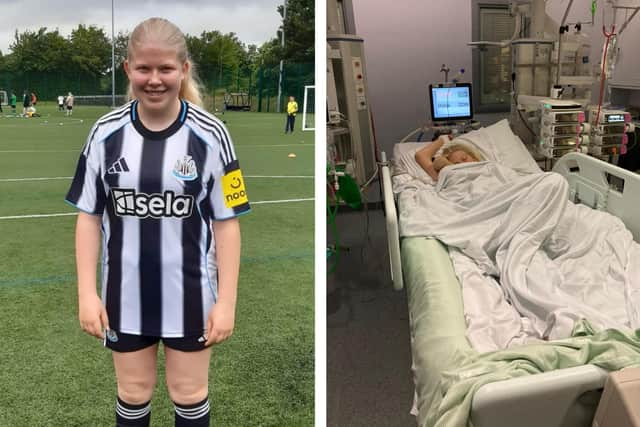
Matilda Stacey was 13 when she had her stroke – describing that when it was happening “it just felt wrong, it wasn’t a normal headache, it was constant”.
Now, ahead of World Stroke Day on October 29, the teenager and her family are raising awareness of stroke as part of the Stroke Association’s ‘Survival Is Not Enough’ campaign.
Matilda was visiting family in the United States when it started. At first, it seemed explainable and a visit to a local clinic in the US led to a diagnosis of sinusitis.

She was given fluids and antibiotics, and was told it was safe to fly home. However, by the time Matilda landed back in the UK, she had been unwell for more than a week.
She could not keep food or drink down. She was exhausted, dehydrated and barely able to lift her head without pain.
The family flew to Heathrow and had to wait for a few hours until their flight to Newcastle. Her mum and brother William were dropped home and her dad took her straight to the nearest A&E hospital. It was late on August 16, 2024 when she was admitted.
Matilda’s left leg suddenly went numb two days later and although it was thought to be because of the amount of time she had been in bed, over the next 24 hours her body began to betray her in ways she could not understand.
Words stopped coming out properly. Her thoughts felt scrambled. Her right arm and leg began moving on their own, while the left side of her body grew heavy and unresponsive. She was unable to walk and stopped being able to communicate.
She was transferred to another hospital and admitted to its Paediatric Intensive Care Unit. After doctors found that the infection Matilda had been fighting had not stayed where it was supposed to, she spent two weeks in intensive care. During that time, she underwent emergency sinus surgery and had another stroke.
Matilda was moved out of intensive care, but she spent another two months hospital as her blood pressure had to be kept at a precise level. Physiotherapy became part of everyday life.
After leaving hospital, it was really hard adjusting to her new body. Nothing came easily anymore, but Matilda is not someone who gives up.
One of her proudest moments came when she completed her Bronze Duke of Edinburgh Award and after having to take a year off, she returned to mainstream grassroots football. Matilda also now plays for the Newcastle United Cerebral Palsy football team.
She said: “Being back on the pitch means everything to me. It reminds me that my life didn’t end when I had my stroke.”
On why she is sharing her story, Matilda explained: “People think strokes only happen to older people. But they can happen to anyone, even kids.”
Above all, she hopes her story leads to understanding and kindness, adding: “I want people to be more empathetic. You never know what someone has been through.”
For more information about the the Stroke Association’s campaign, go to www.stroke.org.uk/survival