
Floral displays to enjoy well into autumn period
Last week a gardening friend asked if or when to ‘pull the plug’ on summer plants that continue flowering into autumn.
It transpired that she had perennial begonias growing outdoors in mind and was concerned that the first frost might damage them.
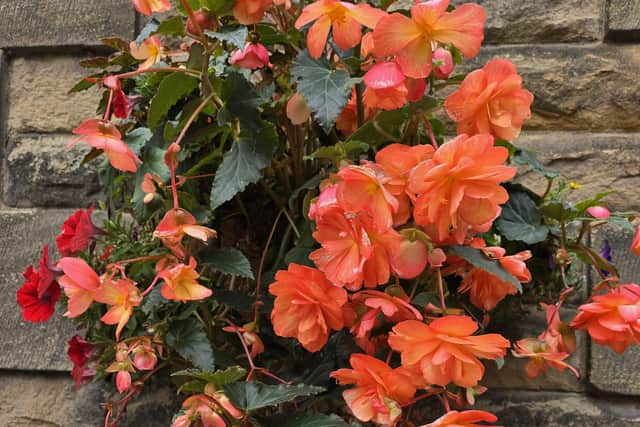

This is a fair question that often arises in October and given the uncertainty of climatic changes, it demands consideration.
The first frost risk has always kept gardeners on their toes and if a tender indoor perennial such as streptocarpus or chlorophytum (spider plant) has been added to a summer outdoor display, now is time to rescue it.
However, pelargoniums, fuchsias, begonias, in my experience, can take an early frost in their stride. So, there is sufficient warning to consider moving them under cover.
Gardeners who regularly follow up summer displays in beds and containers with the planting of hardier specimens for winter/spring attraction are possibly eager to make the changeover.
A vestige of bloom remains on some plants in this garden but so too do a few hive bees after scarcely seeing them all summer. So, we will wait a little longer to help those precious insects.
Dwarf lavenders that line the driveway should have been pruned weeks ago but the few flowers remaining are attracting bumblebees. Even in the cold greenhouse streptocarpus are enjoying their fifth month in bloom. We’re enjoying the gardeners’ equivalent of last of the summer wine!
Understandably, where large summer public displays are managed and the general appearance of plants is a priority, the replanting from summer to winter/spring displays cannot be completed by every organisation piecemeal as in our gardens.
At the entrance to Alnmouth village the summer tubs and hanging baskets have been absolutely beautiful with vibrant colour and thankfully, whoever is responsible for their presence is allowing the plants to fully express themselves before seasonal changes.
Keeping perennials such as roses in bloom by removing each one as it fades, will not weaken them and effect next year’s display. Given reasonable weather conditions and regular removal of fading blooms can result in some roses and several plant species offering new flower buds in November.
And it’s not too unusual when walking around this garden gathering blooms for a table vase in December, and counting how many plant species are in flower, to include a rose or two and unsurprisingly, cosmos which is a half-hardy annual!