
Farmers urged to adapt to changing times in the food sector
Farmers will find success by going back in time, according to a new study of the food production industry.
A report by global real estate services provider Savills predicts a growing desire for ‘better’ food with increased attention to nutritional value and protein content will shape future opportunities for farmers - rather than volume.
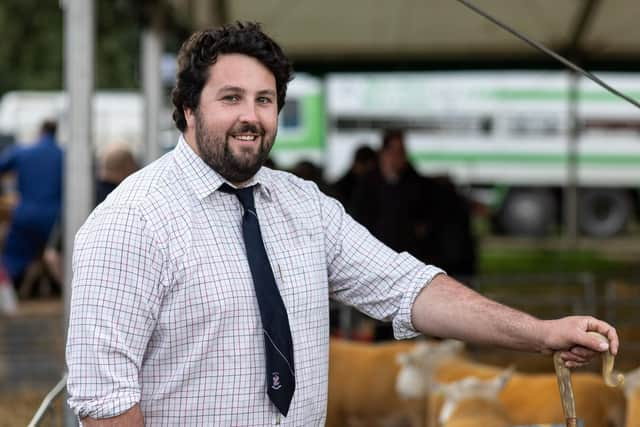

The Spotlight on Food study identifies a growing shift towards better food rather than more food – with consumers giving increased attention to nutritional value and protein content.
Jamie Oliver, from the food and farming team at Savills in the North East and Cumbria, said: “Tomorrow’s table will evolve to exclude ultra-processed foods and move towards something much more comparable to that of the 1940s.
“The UK food system cannot in future rely on volume alone.
"Future resilience will depend on how well the sector adapts to climate risk, responds to changing consumer demand and builds stronger, more transparent, supply chain relationships.
"In practical terms, that means a renewed focus on quality, nutritional value and provenance.”
The report also highlights how mounting pressure from climate risk, policy and profitability are driving operational and behavioural change across the agricultural sector – and a growing shift towards better food rather than more food, with consumers’ increased attention on nutritional value and protein content.
The research team also highlighted the need for farmers to adapt to external pressures through innovation, including a review of crop suitability, investing in irrigation and water infrastructure, and adopting production systems designed to improve resilience over the longer term.
Mr Oliver said: “Better use of technology, regenerative farming practices and closer integration across supply chains – all are expected to play a central role in how the sector adapts.
“The traditional commodity-led, transactional model is giving way to more collaborative and vertically aligned systems, driven by economic, environmental and geopolitical pressures."
He added: “While direct payments to producers were often modest, the value to farmers frequently comes through improved stability, reduced risk and access to support.
"Our research suggests that future success will depend not simply on yield, but on access to data, credible reporting and trusted partnerships across the supply chain.”