
Environmental campaigners brand A1 and A19 improvements as 'dinosaur schemes'
An environmental campaign group has described improvements on major North East roads as ‘dinosaur schemes’ and urged local leaders to invest in more sustainable modes of transport instead.
North East Sustainable Transport (NEST) has argued road improvements will cause additional pollution but bring little benefit.
The group identified the dualling of the A1 in Northumberland and upgrades to two roundabouts on the A19 as key examples of this. They fear that increasing the size of the roads will have little impact on congestion.
NEST spokesperson Jon Hanney said: “Road schemes like dualling the A1 and even bigger roundabouts on the A19 are great for generating headlines, but in practice they also generate extra traffic and emissions, and risk using up funding that could be put to better use.
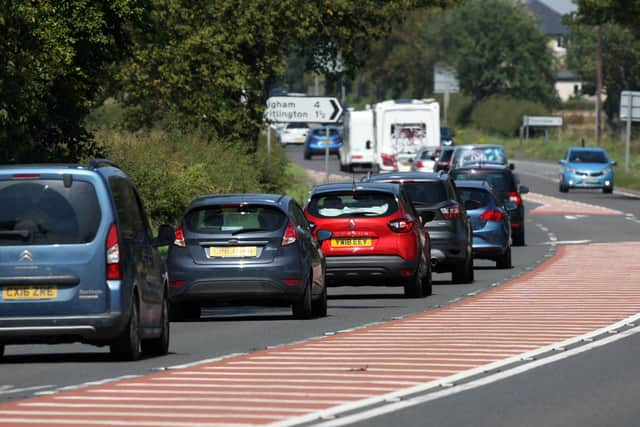

“There is ample evidence from decades of expensive and environmentally-destructive road schemes that they do very little to reduce traffic congestion or journey times. Even National Highways can’t make the figures add up.
“They assessed that the benefits of A1 dualling won’t even cover the cost, let alone boost economic activity.”
The Government cancelled plans to dual the A1 last October, arguing that the scheme – with an estimated cost of more than £500 million – represented poor value for money.
Mr Hanney added: “The logic of the 1960s, 70s and 80s was that more and bigger roads would tackle traffic congestion and improve the economy of the region. Sadly, we just need to look at the A1 Western Bypass to see that adding extra lanes to a busy road to reduce traffic congestion is like trying to solve obesity by buying bigger trousers.
“There is a lot of research that shows investment in walking, cycling and public transport schemes delivers far better value to the taxpayer than big road schemes, and would also help reduce emissions, improve health and deliver a fairer North East.
“We urge NECA to look at sustainable alternatives, like improving the dreadful local rail service on the East Coast Mainline in Northumberland, to give people an alternative to driving and reduce pressure on the A1.”
Northumberland council leader, Glen Sanderson, maintains both projects are vital for growth in the county.
He said: “Today, industry needs to have a proper road network. If we don’t have that, it will put off investors and Northumberland is all about attracting investment.
“Ultimately, new business will go where they can get goods, people and services in and out quickly without getting caught up in long jams. I don’t want to see any reduction in our commitment to getting the road network in Northumberland up to scratch.
“I have full sympathy with the environmentalists. As an alternative, we have reopened the Northumberland Line, putting huge amounts of money into public transport which takes cars off the road.”
Coun Sanderson said that there remained a safety argument for dualling the A1. Data from Northumbria Police shows that there have been a total of 154 collisions on the single carriageway section of the A1 since 2020. Of these, four were fatal – including two last year – while 32 were classed as serious.
He said: “Dualling is the only way to make the road safer. If it costs something in terms of the environment, I’m afraid people’s lives will always come first.”