
Achievements of LIFE WADER project marked at conference in Northumberland
Although the project is ending, work will carry on across the Tweed, the Till and the Northumberland coast
Partners in one of the North East's most ambitious nature recovery projects met on Holy Island this week to celebrate what has been achieved and to discuss how its legacy will continue.

LIFE WADER (Water and Disturbance Environmental Restoration) has spent five years working from source to sea across the Tweed catchment and along the Northumberland coast.
Representatives of the organisations involved with the initiative, led by Natural England in partnership with the Environment Agency, Tweed Forum and Newcastle University, attended and spoke at the end-of-project conference.
It has also brought together researchers, farmers, landowners and volunteers. The aim was to tackle water quality, invasive species, wildlife disturbance and excess seaweed (macroalgae) as connected problems rather than in isolation.
Achievements mentioned at the conference included 1.5km of meandering river channel being restored, 20 hectares of floodplain being reconnected and 1.6km of flood embankment removed or breached at Harehope on the River Breamish.
Ringed Plover numbers have risen by 28% since 2021 and Little Tern productivity has increased year on year. A total of 95,119 native trees and shrubs have been planted across 65 hectares in the Upper Tweed catchment.
Pilot trials removed 5.8 tonnes of macroalgae from Budle Bay and giant hogweed plants requiring treatment across the Tweed catchment fell by almost 46% between 2022 and 2025.
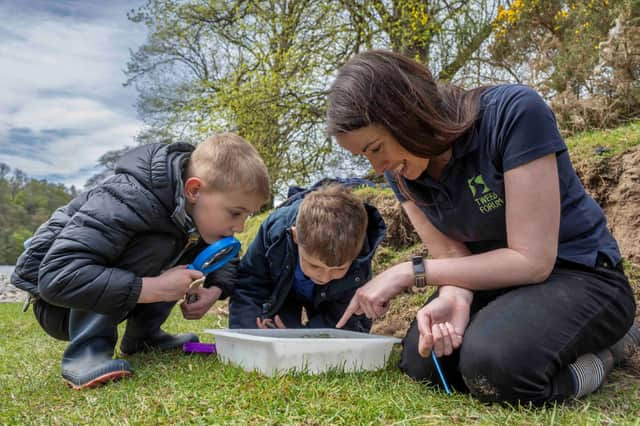
In addition, the project has recorded more than 20,500 visitor engagements. It has also produced the TweedWATCH Education Pack, a free resource for children aged seven to 11.
Project manager Liz Humphreys said: “When LIFE WADER began, we set out to show that rivers, farmland, dunes and the sea can't be managed in isolation.
“Five years on, we have restored a river to its natural floodplain, planted riverside woodlands, protected nesting shorebirds and built tools that will help others tackle invasive species.
“The project is ending, but the partnerships are not. I'm proud that the work will carry on across the Tweed, the Till and the Northumberland coast.”
Following the successful completion of the river restoration work at Harehope, Tweed Forum has delivered more restoration upstream at Hedgeley.
This work again focuses on reconnecting the river with its natural floodplain, using carefully designed interventions that work with nature and natural processes.
Tweed Forum is also exploring two further restoration projects on sections of the River Breamish downstream of Harehope, which are under consideration for feasibility-stage funding.
Scoping work is about to start at three other locations on rivers in Northumberland.