
Alnorthumbria Vets: Routine dental examinations allow problems to be identified and treated
As the colder months arrive and horses begin to rely more heavily on forage and supplementary feed, it is important not to overlook one of the key factors influencing their health and condition: their teeth.
Dental problems are a common cause of weight loss in horses, making routine dental examinations particularly important during winter.
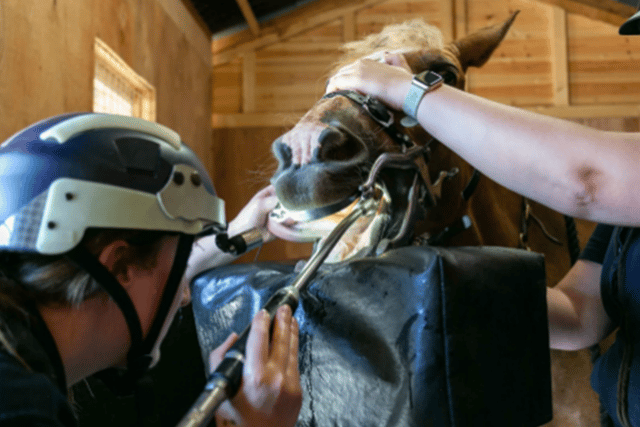

Unlike humans, horses have teeth that continue to erupt throughout much of their lives.
Their upper jaw is also slightly wider than their lower jaw, creating natural variations in tooth contact. Over time, as they gradually wear down their teeth by chewing fibrous food, this can lead to the development of sharp enamel points, which can cause painful ulcers to the cheeks and tongue.
Other common dental conditions include retained caps in young horses, diastemata (gaps between teeth where food becomes trapped), periodontal disease, fractured teeth and other abnormal wear patterns.
Dental discomfort can have a significant impact on a horse’s ability to eat effectively.
Horses may drop partially chewed food, known as quidding, take longer to finish meals or show a preference for softer feeds. Some may also become reluctant to accept the bit or develop unexplained behavioural changes. These signs can be subtle, and weight loss may be the one of the most common clinical sign noticed by owners.
Winter presents additional challenges, as horses often spend more time stabled and depend on hay or haylage for much of their nutritional intake. If dental pain prevents them from chewing efficiently, their ability to maintain condition can quickly deteriorate. Older horses, in particular, may struggle with worn or missing teeth, making regular monitoring especially important.
Routine preventative dental examinations allow problems to be identified and treated before they become more advanced. Most horses benefit from at least an annual dental examination, although some require more frequent checks depending on their age, dental history and individual needs.
A qualified equine dental professional or veterinary surgeon can assess the mouth, identify abnormalities and carry out appropriate treatments.
Depending on the findings, treatment may include rasping sharp enamel points, correcting abnormal wear, removing retained caps, treating periodontal disease or extracting severely damaged or diseased teeth. More complex cases may require further veterinary investigation, such as dental radiographs.
Ultimately, maintaining good dental health is about much more than preventing discomfort.
It plays a vital role in digestion, nutrition, performance and overall welfare. If your horse is losing weight, dropping food or showing changes in eating behaviour this winter a dental examination could make all the difference.