
How the Government’s EU deal will affect Northumberland’s farming and fishing communities

A new agreement has been reached between the UK and the EU that will see big changes across a number of sectors in a post-Brexit world.
For Northumberland, there will be particular interests around farming exports.
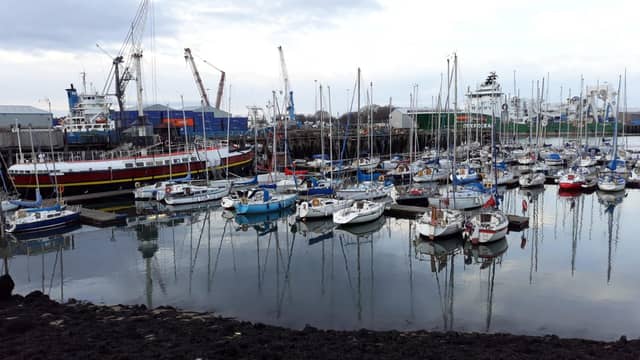
In addition, the county’s coastline is home to a number of fishing communities – an industry that has been put at the heart of political clashes following the deal’s announcement.
According to Government figures, more than 10,000 people are employed in agriculture in the North East. Data from the North of Tyne Fisheries Local Action Group (FLAG) estimates that the area between North Shields and Berwick has a fishing fleet of 119 vessels, employing more than 150 people directly as well as others in the supply chain.
The deal, announced by Sir Keir Starmer, will see reduced checks on food exports to the EU. Border checks on animal and plant shipments, which caused significant delays, will be dropped.
Furthermore, a new sanitary agreement means the UK can sell raw burgers and sausages to the EU for the first time since Brexit. The Agriculture and Horticulture Development Board has said that the EU accounts for 94% of all lamb exports – with the North East home to 13% of the UK’s sheep population in 2023.
The EU also receives 79% of all beef exports, as well as 37% of pork, 94% of sheep and 78% of cheese.
Conservative councillor Mark Mather, who farms near Wooler, was pleased with the reduction of red tape – but added that the sector has a lack of trust with the Government due to the ongoing row over the family farm tax.
He said: “Anything that stands in the way of exports is an issue, particularly in game with animals such as pheasants and partridges. I know how much work goes into getting the license to export them.
“The removal of any red tape is good. However, the Government has given us no reason to trust them.
“As an industry we’re feeling very vulnerable. We seem to be given away to everybody at the minute.
“We hear the Government say they’re backing farmers, but we haven’t seen any evidence so far. We just seem to be an easy target.”
Northumberland Labour leader Coun Scott Dickinson said the deal was a positive step for the county’s farming community.
He said: “This deal is also welcome news for our farming community, opening up trade, removing barriers, and making it easier for farmers to trade with EU countries—something they have continually raised as an issue since the UK had no Brexit deal.
“Reducing red tape, stopping crops from rotting in wagons while waiting at large border queues, and the welcome news that the EU Carbon Tax on farmers will also be avoided.”
The Government is hopeful the changes will mean lower food prices as well as an increase in choice on supermarket shelves. The move has been welcomed by the likes of Morrisons, who said the deal would “ease price pressure” while Asda said it had the “potential” to “significantly reduce costs”.
In return for freer access to EU food exports, the Government has signed up to a new deal that will see current arrangements around access to UK waters for EU fishing boats continue. Initially agreed as part of the 2020 Brexit deal, the access – which sees the UK regain 25% of the EU’s fishing quotas – ran out this year.
Under the new deal, the access will run until 2038. The Government has agreed a £360 million “fishing and coastal growth fund” to invest in new technology and equipment for coastal communities.
However, the move has prompted criticism from leading Brexiteers. Reform UK leader Nigel Farage has branded it a “betrayal” of British fishing.
Coun Mark Peart, who leads the Reform group on Northumberland County Council, said: “The Prime Minister has returned with nothing more than a surrender document, giving away our Brexit freedoms in return for almost nothing.
“Be in no doubt, this agreement will spell the end of what little is left of the fishing industry in Northumberland.”
However, fishing will also benefit from reduced red tape at the border when exporting produce to Europe. The UK exports a large amount of fish such as mackerel, herring and scallops while importing haddock, prawns and tuna.
Around 70% of fish exported goes to the EU. Prior to Brexit, 75% of the fish caught and farmed in the UK was exported.
Despite this, the National Federation of Fishing Organisations has issued a statement proclaiming “disappointment” with the deal.
It read: “Giving the EU twelve years of guaranteed access to UK waters up to the six-mile inshore limit gives away the best card that we still had in our hand in fisheries discussions with Europe. This surrenders the best prospect that the fishing industry and coastal communities had for growth over the coming decade.
“The Prime Minister and EU have claimed that the SPS agreement will benefit the UK fishing industry, in the form of boosted exports. It is true that it may help producers of farmed shellfish and salmon, as well as the biggest retailers and exporters, but it is very unlikely that any savings from reduced export costs will be passed down to the men and women who go to sea.”
Responding to concerns, Coun Dickinson added: “The deal will protect and enhance Northumberland’s coastal communities and provide an injection of £360 million into our fishing industry, which will be a welcome boost for the fishing community.
“In addition to job creation, easier exportation and domestic benefits for travellers and pet owners will all arise from this deal. It’s a truly common-sense approach after 10 years of dithering over a Brexit deal that has been poor and harmed us; finally, we have a strategy that benefits everyone while not being in the EU formally.
“This is good news for Northumberland, the North East and the UK and will tackle a wide range of issues, including the firm commitment on Illegal Immigration reduction, channel crossing prevention and swifter returns that a no deal situation hindered.”
A YouGov poll published on Tuesday showed that 66% of British people would support the UK having a closer relationship with the EU. This included more than half of both Leave (52%) and Reform UK (54%) voters.