
Holiday lets plan lodged for historic Alnwick property as developer reveals challenges of project
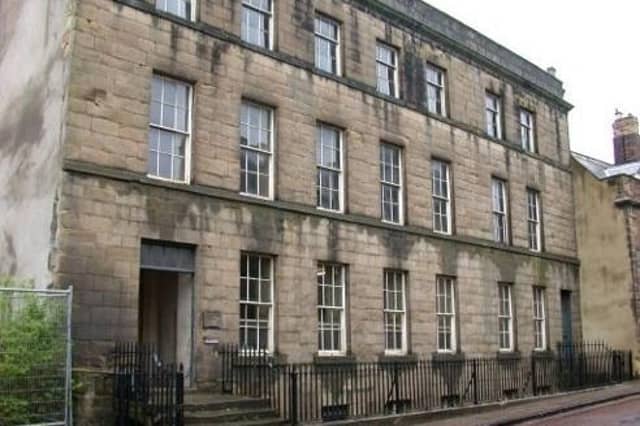

Plans have been lodged to turn one of Alnwick’s most historic properties into holiday lets.
An application for the conversion of Grade II* listed Narrowgate House – also known as General Lambert’s House – has been submitted by Stablewood Developments.
The building has been unoccupied for 23 years, and for several years was included on Historic England’s Heritage at Risk Register
In recent years, Stablewood Leisure, owners since 2015, have carried out emergency repairs to the roof structure.
Prior to that, planning permission was granted in 2015 to convert the building into five apartments, along with three homes in the rear garden. Work began with the demolition of the coach house building but never progressed beyond that due to cost reasons.
The new application seeks full planning permission and listed building consent for its change of use.
Danny Johnson of Stablewood Leisure said: “Narrowgate House is a complex and historically significant Grade II* listed building.
"Over recent years, substantial investment has already been made to stabilise the structure, including major roof and underbuilding works, which removed it from the Buildings at Risk Register with the support of Historic England.
"Alongside this, numerous specialist surveys, reports and investigations have been undertaken to help inform the building's long-term restoration.
“However, there is still a significant amount of work required. We estimate that the overall investment still needed could be in the region of £1.6m to £2m.
“Due to the nature of a Grade II* listed building, the restoration costs are exceptionally high, and even once fully restored, the building is will not be worth anything close to the amount invested. That makes it a particularly challenging project from a financial perspective.
“Our proposal for 10 holiday lets is intended to provide the building with a sustainable long-term use, creating the income needed to justify the restoration and secure its future. Without a viable use, it becomes very difficult to invest at the level required.
“The planning application also includes three mews houses to the rear of the site. The intention is that any profit generated from those homes would be reinvested into the restoration of Narrowgate House, helping to bridge the funding gap created by the exceptional restoration costs.”
He added: “As a small, family-owned Northumberland business, every investment we make has to be carefully considered and financially sustainable. We simply don't have the resources to restore a building of this scale without a long-term plan that enables us to recover a proportion of the significant costs involved.”
A planning report on the applicant’s behalf adds that holiday accommodation would represent a less intensive form of development than permanent residential use.
The property was created by John Lambert, a prominent solicitor and a generous philanthropist. In 1811 he bought two small houses, then extended, modernised and refaced them to create a stylish home for his large family and thriving legal practice.
On his death the house passed to his son, then was sold to William Dickson, a founding partner of the law firm which became Dickson, Archer & Thorp. They occupied the building until the practice closed in 2003, leaving a collection of legal records that detail almost 200 years of Northumberland’s social, political and economic life.
It will be open the public again in September as part of Heritage Open Days.