
Government slammed for attacking “people on pennies” as 42 MPs refuse to back welfare cuts
The Government has been accused of taking money away from “people on pennies” while the wealth of the richest in society continues to rise – by one of its own MPs.
It comes as six North East MPs added their signatures to a letter calling on Keir Starmer’s administration to reconsider planned cuts to welfare. The statement, signed by a total of 42 MPs, called the move “the biggest attack on the welfare state since George Osborne”.
The Government has come under increasing fire after a poor performance in the local elections that saw them lose 187 council seats across the country. The bruising night saw them reduced to eight seats in Northumberland and just four in County Durham.
The major shake-up to welfare was announced in March and aims to save money and support people who can work to find jobs. Ministers claimed that changes to a key disability benefit called personal independence payment (Pip) and universal credit (UC) would save around £5bn a year by the end of 2030.
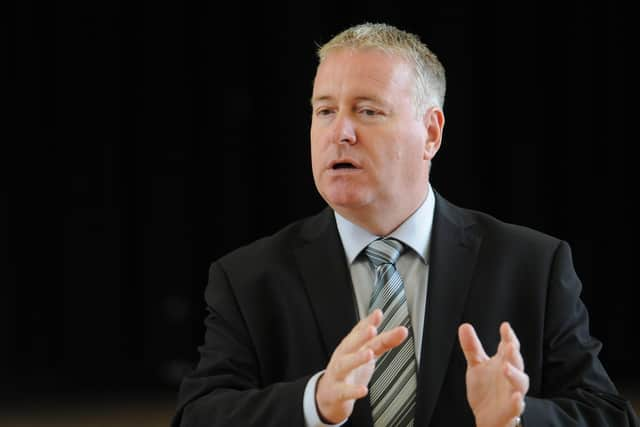

The North East MPs to sign the letter were:
- Ian Lavery (Blyth and Ashington)
- Emma Lewell (South Shields)
- Mary Glindon (Newcastle upon Tyne East and Wallsend)
- Kate Osborne (Jarrow and Gateshead East)
- Grahame Morris (Easington)
- Mary Kelly Foy (City of Durham)
Speaking in Parliament last week, a visibly angry Mr Lavery slammed the proposals for impacting those on lower incomes.
He said: “There is not one person in here who was elected to make people poorer – not one. If you are, you should feel ashamed.
“Look at yourself in the mirror. I wonder what has went wrong. There are more millionaires than ever, more billionaires than ever.
“Why, when the rich are getting richer, and the very rich are getting richer, are we attacking people on pennies, taking away their livelihoods, making their lives so miserable?
“In my constituency of Blyth and Ashington, there are 10,467 people dependent on PIP for their livelihood. They are not living a life of luxury, they are dependent on PIP to live. It is in the bottom 10% for social deprivation in the country.”
According to Oxfam, UK billionaires saw their collective wealth increase last year by £35 million a day to £182 billion. ONS figures show that between 2020 and 2022, the top 1% of households held 10% of all household wealth in Great Britain, which was the same as the proportion held by the least wealthy 50% of households combined.
Speaking to the Local Democracy Reporting Service, South Shields MP Emma Lewell said: “Fundamentally, it goes against my values to take away money and support from people who need it to survive.
“It is at odds with what the Labour Party stands for and it is not going to achieve the savings the Government think it will. It will end up costing more in the long run.
“In the North East we have some of the highest numbers of people on PIP. There is a fundamental misunderstanding on what PIP does and what it is for.
“It is a benefit that keeps people in work. If we start withdrawing it, it is only going to increase unemployment and increase the burden on the NHS and other services.
“What the Government should be looking at is the Equality Act and Access to work, putting in place those things that will make work accessible for people with disabilities.”
Mary Glindon said: “I have been contacted by many vulnerable constituents who are really worried about how the cuts will affect them. I understand the Government needs to save money, but just like the winter fuel cuts, it seems the poorest and most vulnerable are being forced to plug the gap in the country’s finances.
“There should have been a full consultation before any of these cuts were proposed.”
Easington MP Grahame Morris added: “I will not vote to continue austerity. If the Government press forward with these cuts to disabled people, and undermine the welfare state, I will vote against them.”
The Government has insisted the reforms are part of getting people back into work. A spokesman for the DWP said: “We are determined to support more people back to work and at the heart of our reforms is a £1billion package to help disabled people and those who are long-term sick find secure, stable jobs.
“Alongside this, as part of our Plan for Change, we’ve increased the national living wage, uprated benefits, and are helping over one million households by introducing a fair repayment rate on universal credit deductions which will help boost financial security up and down the country.”
The DWP says the new system will be fairer for the taxpayer, unlocking work for those who can get into employment while still providing support for those who can. In addition, those with the most severe, life-long, conditions who we know will never be able to work will be exempt from Universal Credit reassessments.