
Native crayfish population in Northumberland survives following deaths
Intensive surveys by the Environment Agency has found that the native white clawed crayfish population in Northumberland has survived a major incident.
In autumn 2024, around 100 of the endangered native species were found dead in the Morpeth area (River Wansbeck catchment).
The subsequent investigation determined crayfish with similar symptoms – unusual orange patches on their shell displaying as ulcers or lesions – were widespread across the Wansbeck catchment, as well as areas of the neighbouring rivers Tyne and Blyth.
A series of summer surveys took place during 2025 to try to identify the cause of the symptoms, as well as understand the impact on current populations and mortality rates.
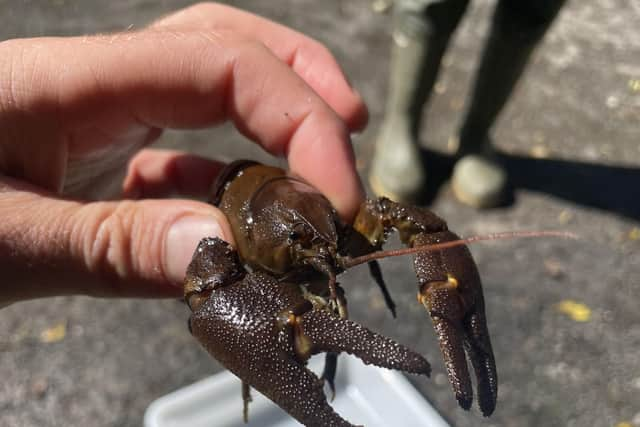

In total, the Environment Agency and National Trust have carried out 76 surveys since the deaths were first reported.
The main findings of the investigation are that the symptoms do not appear to be fatal at a population level, it appears some, particularly younger crayfish, can recover from the visual symptoms via the normal moulting process and many with symptoms can live with them (some that had symptoms in autumn 2024 are still alive now).
In addition, the mortalities – which happened during a natural moulting period – seemed to occur more frequently in older and larger crayfish, where the symptoms appear to interfere with the moulting process, there is a reduction in instances and severity of the symptoms and there have been no further reports of native crayfish deaths in any catchment since autumn 2024.
Further research into the cause of the symptoms is still being carried out.
Sarah Jennings, area environment manager at the Environment Agency, said: “The River Wansbeck supports one of the highest density populations of white clawed crayfish in the world and when the initial deaths were reported, we were concerned this could have a devastating impact.
“While it’s too early to tell what the long-term implications are for the Wansbeck population, there are hopeful signs that the impact is limited and it will remain a stronghold for the species.
“There’s still some research on-going to try to understand what it is that’s causing the issue, but it could be something we never fully understand.”
If people see any crayfish, alive or dead, leave it where it is and report it immediately to the Environment Agency on 0800 807060.