
Lindisfarne National Nature Reserve launches cutting-edge conservation hub
Environmental scholars across Northumberland will gain unprecedented access to high-quality conservation research through a pioneering new science hub at Lindisfarne National Nature Reserve.
A special ceremony has taken place to mark the launch of the facility that positions the iconic reserve as both a biological hotspot and centre for environmental action, supporting vital research partnerships with regional universities.
Also a nature research hub, it addresses critical conservation challenges including climate change adaptation, invasive species tracking and marine ecosystem protection.
Research will focus on the reserve’s unique landscape, which supports up to 60,000 wintering birds, 4,000 grey seals and nationally important seagrass beds.
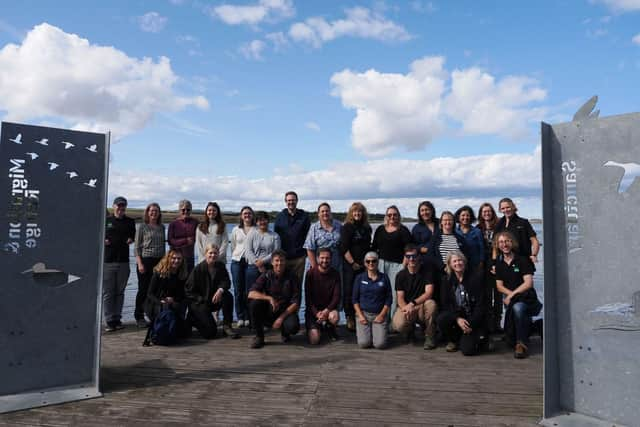

Natural England scientists will collaborate with university researchers on projects examining wildlife disturbance and water pollution impacts.
Marine ecosystem studies will investigate seagrass conservation, seal population monitoring and environmental DNA techniques for tracking invasive species across the North East of England’s coastal waters.
The facility itself extends beyond scientific research to promote public engagement with nature recovery. A variety of health and well-being programmes will be on offer, demonstrating how connecting with nature improves mental health and reduces anxiety.
Staff and volunteers will also use the hub to encourage wider community involvement in conservation efforts, supporting the Natural England commitment to growing nature through ‘more, bigger, better, and more joined up’ approaches.
Andrew Craggs, Natural England senior reserve manager, said: “Lindisfarne’s ever-changing landscape, where land and water create unique habitats, provides an ideal setting for advancing our understanding of ecosystem dynamics.
“The reserve supports 10 orchid species and serves as breeding ground for internationally important numbers of birds all year round. It also provides a home to the inquisitive and beloved grey seal, as well as some of the largest seagrass beds in country.
“This new facility showcases how scientific evidence empowers practical action for the environment.
“It will provide a unique opportunity to research, restore and protect nature – both within the reserve and across the wider landscape, by working closely with universities and our local communities.”