
Historic organ at centre of ‘Way Forward’ plans for North Tyneside church
An expertly restored rare mid-19th Century church organ, believed to be one of the last of its kind still in regular use, is at the forefront of plans to reshape the future of a North Tyneside church.
The organ was built for St John’s Parish Church in Killingworth by Robert Postill of York, who was one of the most prolific and renowned organ builders of his generation.
It is so rare that it has been granted Grade II* listed status by the British Institute of Organ Studies because of its national importance and significance, in much the same way as ancient buildings are protected.
The organ has been dismantled and is being repaired and restored in their workshops by North Shields organ building specialists John Lightbown & Sons Organ Builders before it can be relocated on to a newly-built mezzanine floor at the rear of St John’s Church as part of an ambitious plan to make the building – the foundation stone of which was laid in 1867 – more accessible for use by the community in the old Killingworth Parish.
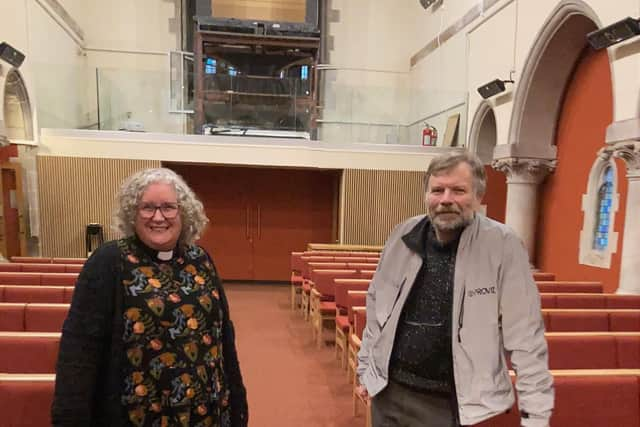

The company says that carefully restoring the organ to its original condition will fully maintain its historic character and integrity, ensuring it will give very many more years of excellent service to the church.
As part of St John’s ‘Way Forward’ community engagement plan, the organ restoration is being carried out at the same time as traditional pews in the church have been replaced with moveable seating to create a more flexible space within the building for different uses; modern, efficient and environmentally-friendly heating installed; while a kitchen, storage space and toilet facilities will also be provided.
The first phase of the work has cost £320,000 and the main funding was from a National Lottery Heritage Fund grant of £196,470, which included the restoration of the organ, all of which has been approved and sanctioned by the Diocese of Newcastle.
Phase one would not have been possible without the National Lottery Heritage funding, but this was alongside support from a range of other funders and fund-raising events, which have all contributed to helping the project being realised.
The next challenge is to deliver phase two of the project that will provide a new entrance and much-needed toilets to enable greater use of the church, which will take the total cost to over £500,000. The aim is to have all the work completed by the end of 2026.
Rev Sarah Moon, Priest in Charge for the past five years, said: “For more than 150 years, St John’s Church has been at the very heart of community life in Killingworth and that is a situation we want to see continue and develop for generations to come.
“To ensure this can happen, we need to engage with all sectors and age ranges of our community – hence our plan to make our resources as a church more available to local people and groups, rather than just as a place of worship for our congregation.
“We already work with a number of community groups, as well as local schools who come to our church, and we are looking to engage with a much wider range of the community through the enhanced facilities.
“In the run-up to Christmas, for example, more than 600 children from primary schools within walking distance of our church joined us for their nativity plays, while the Percy Hedley School held two Christingle Services at St John’s. Backworth Brass Band and Killingworth Community Choir have also given a concert at the church this Christmas.”
“As custodians of such a rare ecclesiastical musical instrument built by a master craftsman such as Robert Postill, it is also our duty to ensure that it is maintained in excellent condition – not only for organists from across the region to play it, but for people to have the opportunity to enjoy listening to it at recitals and services at St John’s,” said Church Warden Angela Henderson.
Nigel Brown has been the organist at St John’s for the past two years and he said it has been an honour and a privilege to regularly play the Postill organ.
“It is a very special musical instrument, which is still in its original condition with no adaptations since it was installed all those years ago,” added Nigel, who first learned to play the organ at the age of 16.
“We are also told that when the organ is fully restored on the new mezzanine floor, it will sound even better from its elevated position.”
Recently, Nigel completed a marathon cycle ride visiting churches in England and Scotland that have Postill organs to raise money for the restoration of the St John’s organ.
His 600-mile ride took him two weeks to complete and raised some £2,000 for the restoration work.
Once the organ has been fully restored within the church, the plan is to organise an exhibition, open days and a display about its history and the work of Robert Postill.
St John’s has set an Easter 2026 target for the restoration work to be completed and the organ relocated to its new position in the church, which will be celebrated with a launch event and promotional programme of concerts and activities.