
Blyth mum challenges stereotypes as she swaps the skies to become one of Lumo's first female train drivers
A Blyth mum has proven it's never too late to completely change track after swapping the skies to become one of Lumo’s first female train drivers.
Sam Bentley, 44, worked as cabin crew out of Newcastle Airport for more than a decade until her life was upended when Thomas Cook went bust in 2019. Her husband, a pilot, also lost his job and when the pandemic struck the family were left facing an uncertain future.
The mum-of-four is now thriving on a completely different track after becoming a fully qualified train driver - a role traditionally dominated by men - thanks to an apprenticeship scheme by Newcastle-based train company, Lumo.
“I never imagined I’d be a train driver at 44,” Sam says. “But Lumo gave me the chance to retrain and start a completely new career. It’s been life-changing.”
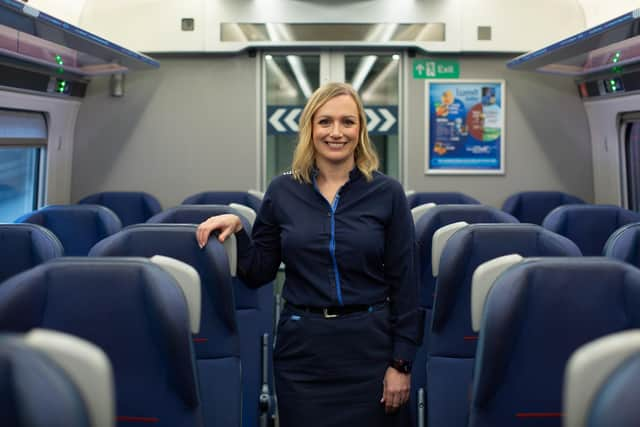

As part of National Apprenticeship Week (Feb 10-16), Sam is an example of how apprenticeships can transforming lives and challenge stereotypes.
Sam explains: “At Thomas Cook, I was there 10 years before I got a permanent contract, never mind any progression. But at Lumo, I’ve gone from starting a new career to being a qualified train driver in a couple of years.”
Sam first joined Lumo as a customer ambassador in 2021, a role similar to her previous job. But it was Lumo’s apprenticeship program that opened the door to something entirely new and set her on track to become one of the company’s first female drivers.
Lumo says it has made apprenticeships a key part of its workforce strategy. Partnering with Train’d Up, the company has created opportunities for people to build careers in rail, and a total of 95% of Lumo’s workforce now started as apprentices.
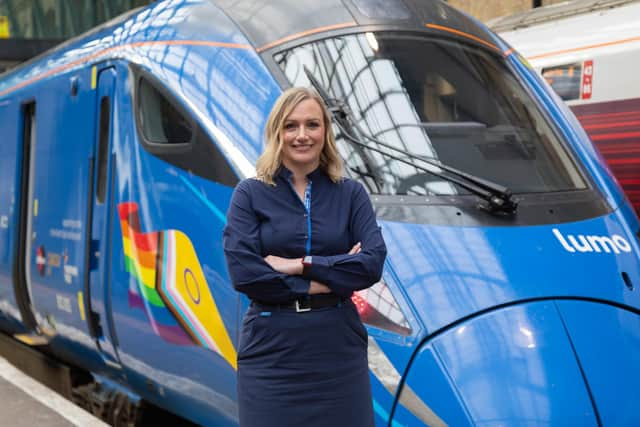
Martijn Gilbert, joint managing director of Lumo says: “Apprenticeships create opportunities – not just for individuals, but for communities. They bring new energy and ideas into rail, breaking down barriers that have historically limited access to careers in this industry.
“People say the rail industry is broken, but open-access operators are showing that’s not true. We’re one part of the network that absolutely works for everyone.”