
Berwick Thought for the Week article: 'Roodmas'
On September 14, the Church calendar includes what is known as Holy Cross Day.
This day started as a commemoration of the finding of the True Cross, the cross on which Jesus was crucified, by Helena, the mother of the Roman Emperor Constantine.
Holy Cross Day has gone by different names through the centuries, including in Old English Roodmas. The word “rood” is translated as rod or pole, but is associated in Old English with the word cross.
In Northumberland, we are steeped in Old English history – including a poem titled “The Dream of the Rood”. This poem takes the perspective of the cross as Jesus is led to his crucifixion and death, but is then also part of Jesus’ resurrection.

The poem follows a pattern of triumph and victory found in Anglo-Saxon poetry where the hero overcomes a great enemy. In the case of the “The Dream”, Christ overcomes the power of death.
The Rood that was forced to be a symbol of fear and oppression in the Roman Empire is transformed to be a symbol of hope and new life.
Holy Cross Day may have started as the commemoration of an historic piece of archaeology, but it also shows the importance of the cross in the Christian faith. The cross shows that even in our darkest and most despairing moments, God can transform our lives.
When we think, or others want us to think, that life is about getting and hoarding power at the cost of others, the cross shows God’s willingness to give up power to show the outcast and marginalised that they are not alone.
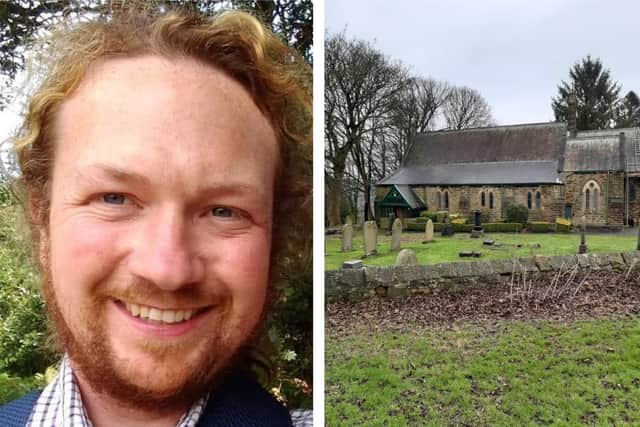
Rev Alex Firman is Assistant Curate in Lowick, Ford and Etal and Ancroft, living in Ford Village. He is originally from Suffolk and is a novice in the Third Order of the Society of St Francis. His hobbies include making marmalade, walking and random interests in history.