
‘Too late’ - Northumberland County Council urged to take action on nurdle spillage
Council chiefs in Northumberland have been urged to take action on a plastic pellet spillage which is affecting the county’s beaches and coastline.
Volunteers helping with the clean up of the pellets – known as nurdles – which have washed up on beaches have called on the council to act faster in their response to the issue.
It is estimated that one billion of the nurdles were release into the environment following a collision between ships in the Tyne – spilling into the water and being carried out the sea, where they are now washing up on beaches.
In Northumberland, pellets have been found at Blyth and Cambois – with sightings as far north as Amble and Druridge Bay.
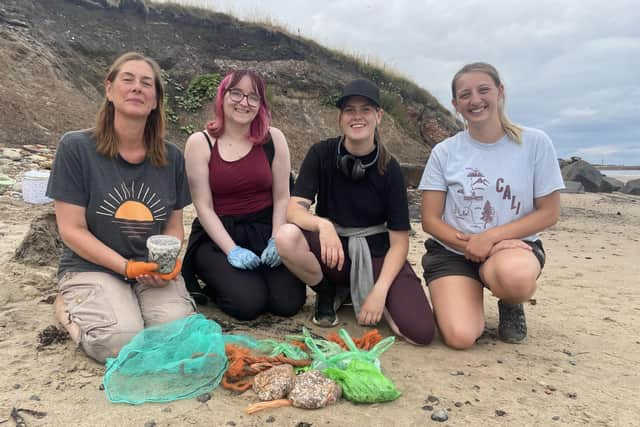

Hoards of volunteers headed to places like Tynemouth and Whitley Bay to help clear up the nurdles, but there is now a call for volunteers in Northumberland.
One volunteer, Laura Moscrop, revealed how people can help out and called on the council to do more to support the volunteer effort: “It's not just South and North Tyneside, it’s also Northumberland as well, and it's very important that we protect our wildlife and our coast and protect the ecosystem essentially.
“Northumberland County Council haven't really spoken out on it.
“I think North Tyneside Council has, but Northumberland [have been] very slow with it and there's a lot of misleading things out there where people are suggesting don't clear up the nurdles.
“But if we're waiting like a month for the council to take action, it's going to take too long to collect all these nurdles and it'll be too late and they'll be under the ground and they'll be here for years.”
Initial advice from councils were for the public to stay away from the nurdles and report any sightings via Fix My Street, however, North Tyneside council have since stated that nurdles are safe to clear up if gloves are worn.
Advice on their website states: ‘The public health risk is currently considered to be very low. While the pellets are not toxic, they can pose a hazard to wildlife and other animals if ingested.’
It continues: ‘If you are planning to take part, please ensure you: always wear gloves; do not handle with bare hands, use heavy-duty bags that can be collected by the council, wear suitable clothing for the weather, and wear sturdy footwear appropriate for beach conditions.’
Very little equipment is needed to help clear the nurdles, with items as simple as a sieve, a bucket or a dustpan and brush being effective tools.
“If you want to join in, I would just recommend joining the WhatsApp group,” Laura continued.
“Have a look on the website that was created, there's like a whole volunteer board essentially that answers any questions you might have.
“But all you need really is just you and yourself, just get a sieve if you've got one, dump the sand in the sieve, mix it around, get all the sand out, and then eventually you'll just be left with potentially a little bit of seaweed and mainly the nurdles which are the most important thing to get out. You don't need a lot.”
Northumberland County Council have since updated guidance for volunteers, revealing that there are drop off points for colletced nurdles at Cambois, Newbiggin and Blyth beach.
A spokesperson for the council also added: “Northumberland is in a very different position to North and South Tyneside in terms of the amount of pellets washing up.
"However, our teams have been monitoring and cleaning up over recent days, and we welcome the support of local groups and volunteers.”