
Rangers hopeful colony of terns at Long Nanny is on path to recovery after devastation of bird flu
Rangers who keep close watch over Britain’s largest mainland colony of Arctic Terns on the Northumberland coast are holding their breath to see whether the colony has managed to escape bird flu.
Last summer over 1,000 Arctic Tern chicks and several Little Tern chicks perished due to avian influenza at Long Nanny, near Beadnell.
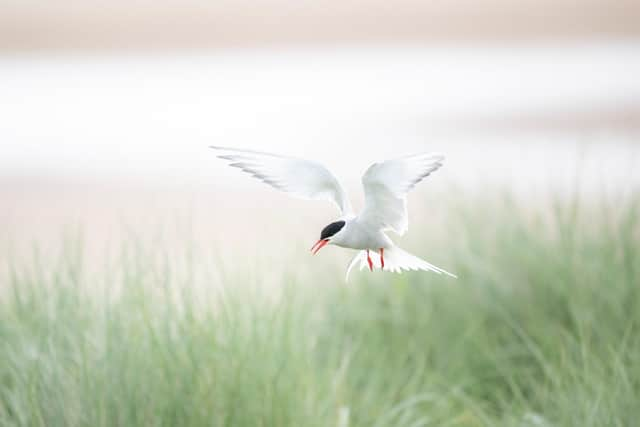

This year the number of adult breeding birds are lower, but not as much as the six National Trust rangers who guard the colony during the breeding season feared, with the number of nests with eggs this season down by 20 per cent; 1,040, compared to 1,300 in 2023.
James Porteus, area ranger at Long Nanny said: “By this time last year, we had the first few cases of bird flu confirmed and sadly 1,329 Arctic Terns died from the disease (1,066 chicks and 263 adults).
“The good news is that the number of returning adults is higher than we hoped, with well over 2,000 breeding adults recorded. Most birds have successfully laid eggs which have now hatched.
"We are now on tenterhooks to see how the chicks fare – and are hoping that they make it through these critical first few weeks and are able to survive the annual pressures of predation and extreme weather due to climate change.”
The Little Tern colony is far smaller and the number of returning pairs are down by a third with a minimum of 24 pairs this year, compared to 37 pairs in 2023.
James continued: “Any drop in Little Tern numbers is very worrying. The number of breeding pairs has been gradually declining over recent decades, from approximately 2,000 breeding pairs in England in the 1980’s to roughly 1,400 pairs today. Habitat loss and recreational disturbance along our coast is impacting our Little Tern population and reserves such as the Long Nanny are so important to the future of this species in the UK.”
The team have also confirmed the first known breeding attempt between an American Black Tern and Arctic Tern. However, although three eggs were successfully laid, it now seems that they are unlikely to hatch given the period of time which has now passed.
Professor Chris Redfern from Newcastle University, said: “Black Terns from Europe visit the Northumberland coast occasionally each year, but to get one of the American subspecies is very rare indeed. It is even more unusual for such a bird to pair up with a very different species of tern.
“Black Terns lay smaller eggs than Arctic Terns, and we now know that the Long Nanny American Black Tern is female. Although the eggs appear to have been fertile, hatching is now overdue and we suspect that the species difference between Arctic and Black Terns is too wide to allow healthy, living chicks to develop.
“Terns are loyal to their partners, so despite it now looking very unlikely that these eggs will hatch, it will be interesting to see if they try again next year.”
Visitors to the area are requested to avoid disturbing any of the birds at Long Nanny by keeping a safe distance and keeping dogs on a short lead at all times during the next few critical weeks.