
National Trust rangers begin annual seal survey on the Farne Islands after birth of first pups
A survey is underway on the Farne Islands following the birth of the first grey seal pups of the season.
The first pup on Inner Farne was spotted at the end of October and pupping season is now in full swing.
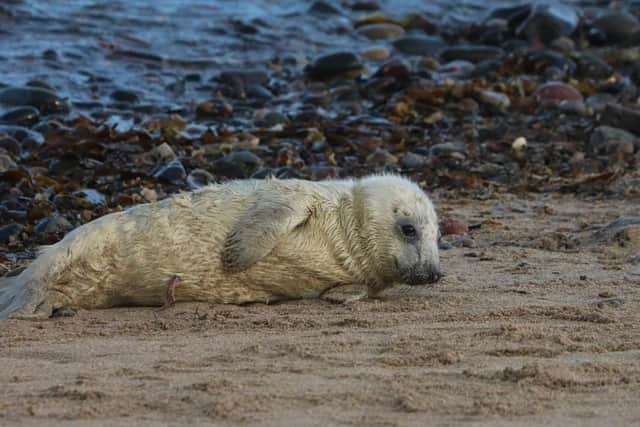

Their arrival signals the start of a busy few months for National Trust rangers as thousands of adult grey seals haul out onto the islands' rocky shores and beaches to give birth.
The Farne Islands are home to one of the largest grey seal colonies on England's east coast and support a long-term monitoring programme that is internationally significant. The islands hold the world's longest continuous dataset for grey seal monitoring, with surveys dating back to 1952.
Sophia Jackson-Chaytor, area ranger for the National Trust on the Farne Islands, said: “The first seal pup is always a welcome sight and one we look forward to every autumn. Its arrival marks the beginning of a remarkable season, when thousands of grey seals come ashore on the Farne Islands to give birth.
“The Farnes are one of the most important breeding sites for grey seals in England, and our annual survey helps us build on a monitoring record that stretches back to 1952. Thanks to more than 70 years of data, we can better understand how this population is changing over time and how seals are responding to wider environmental pressures.”
The survey continues to use drone technology, working in partnership with researchers from Newcastle and Oxford Universities.
In the 2025 breeding season, an estimated 3,385 grey seal pups were recorded across the Farne Islands. While this represented a 6.6 per cent reduction compared with the previous year, conservation staff say the figures remain encouraging.
Tom Hendry, area ranger for the National Trust, said: “We’re currently midway through the 2026 survey, so we'll have to wait until analysis is complete to understand this year's trend.
“Although the 2025 count showed a small decrease from the previous year, it's important to view that in the context of longer-term population growth. In 1952, just 658 seal pups were recorded on the islands. Today’s figures suggest the population may be reaching a natural plateau, reflecting the amount of suitable habitat available for seals to pup across the Farne Islands.
"The drone technology gives us an excellent view of even the most remote parts of the islands and helps us detect pups that might otherwise be missed. It's transformed how we monitor the colony and provides invaluable data for understanding this internationally important population.”