
Drones and tech can never replace a soldier’s instinct - major army training exercise completed in Northumberland
Technology will never replace soldiers, but the army must embrace it within traditional practices.
That was the message from the 1st Battalion, The Royal Anglian Regiment, as they completed training exercises at Otterburn Camp and Kielder Forest using a wide range of technology and drones for use in combat.
FPV (first person view) reconnaissance and strike drones were used for precision strikes, piloted from a safe distance using special goggles to beam pictures directly to the pilot, as if they were sitting in the cockpit.
Unmanned Ground Vehicles are also used to help the army deliver supplies across a range of terrains and to get to places that soldiers simply couldn’t without an increased risk to life - whilst Ghost UAVs are used to spot enemy combatants in the distance.
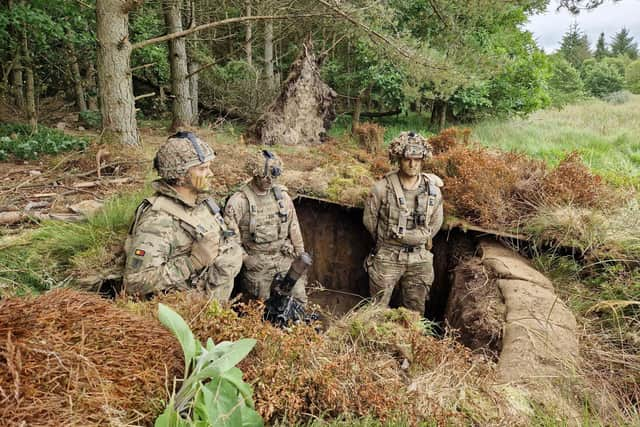

Major Andy Crompton, on the task facing his regiment, said: “We’ve been demonstrating some of the aspects that we've been exercising over the last two weeks in Otterburn Training Area and Kielder Forest.
“Specifically, our integration of robotic and autonomous systems into what is otherwise would have been traditional infantry actions that the 1st Battalion, the Royal Anglian Regiment, would be called on to do.”
All of this technology will allow the army to do things they have never been able to do before - but none of it is as important or impressive than a soldier’s instinct.
Streamlining communication processes and being able to map out entire battlefields using this technology have helped the army’s practices, but a human mind and heart will still be the one making the final call.
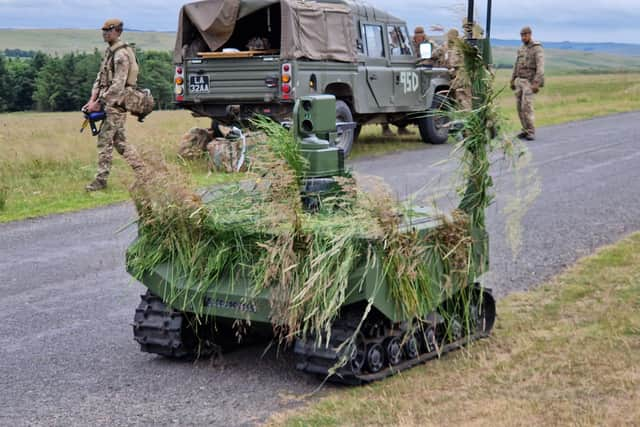
For every Ghost UAV in the air, a pilot is needed. Someone to view the camera footage and relay that back to the command centre is also required. Then those in the command center need to process the information, with the help of those on the ground, and formulate a plan.
You may think that the future of military combat will be played out on computer screens and managed by people miles away from any conflict - but that couldn’t be further from the truth.
Soldiers spending days on end in man made hides disguised to look like natural foliage on the first floor is still a common sight and whilst they do use technology to help their decision making process, an even greater importance is placed on those on, or sometimes in, the ground to push forward their opinions on what they can see with their own eyes and what the technology is showing them - a soldier’s instinct if you will.
And Northumberland, specifically Kielder Forest and Otterburn Camp, is the perfect place for the army to do this.
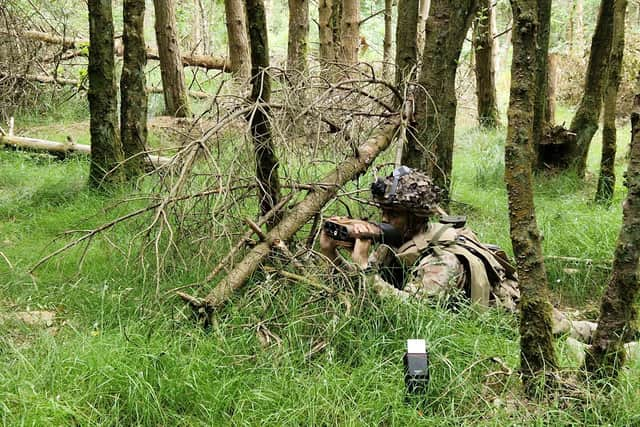
Heightened tensions in the Russia-Ukraine conflict, one that is on a daily basis informing how best to use this new technology, means that northeast Europe, specifically Finland, could become an important battleground in the future.
Conditions that the army may face in Finland are pretty impossible to replicate in the United Kingdom - but Kielder Forest is the closest match that they can find and testing this technology in conditions that may face them if they are ever required in a conflict zone, is the best way to ensure that the army will be prepared for any eventual scenario.