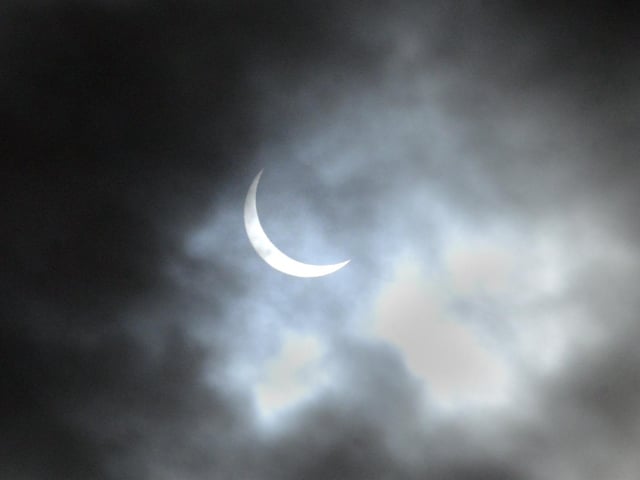

Around 90% of the sun will be covered by the moon in our region – the most coverage in the UK since 1999.
A solar eclipse happens when the Earth, moon and sun align. The moon passes in front of the sun, blocking its light and casting a small shadow on Earth.
After 6pm (timings vary slightly for different parts of the UK), ‘first contact’ - when the moon first covers part of the sun - will occur. The moon will then move slowly in front of the sun.
The maximum eclipse in Alnwick will be at 7.06pm.
Remember to watch it safely. Sunglasses don’t provide adequate protection.
There are two safe ways to watch a solar eclipse - specialist eclipse viewers or indirect viewing methods.
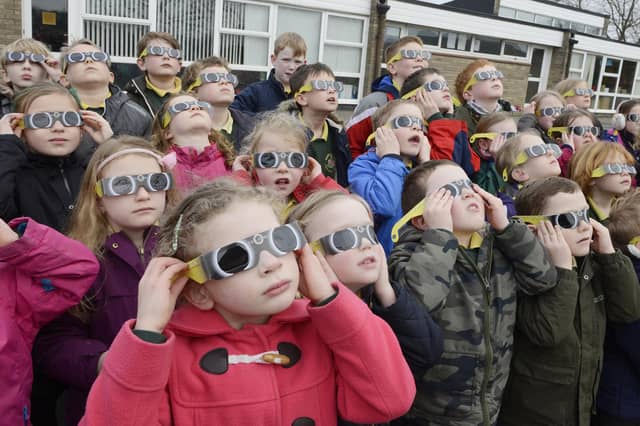
If using eclipse glasses or handheld solar viewers, make sure they are genuine with specially designed filters.
You can watch the eclipse indirectly by using a pinhole viewer (which you can make at home), viewing the sun's image projected through a colander or the gaps between tree leaves or projecting the sun's image onto a sheet of paper using a simple pinhole projector.
The weather forecast for the North East is for clear skies.
Take a look at these solar eclipse pictures from Northumberland schools in 2015.
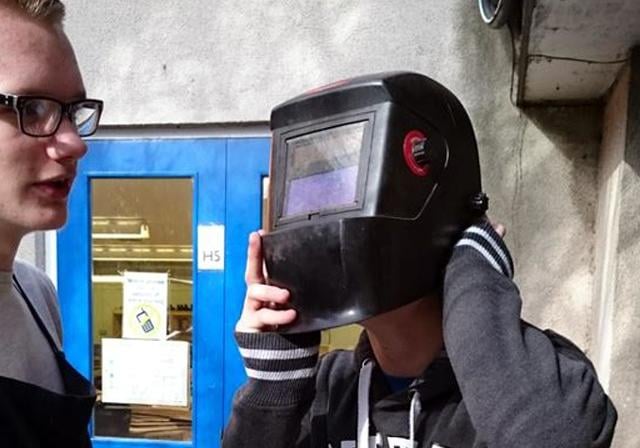
5. Duchess's Community High School, Alnwick
Students at Duchess's Community High School, Alnwick, prepare to view the solar eclipse safely on Friday, March 20, 2015. Picture by Will Larkin Photo: Will Larkin
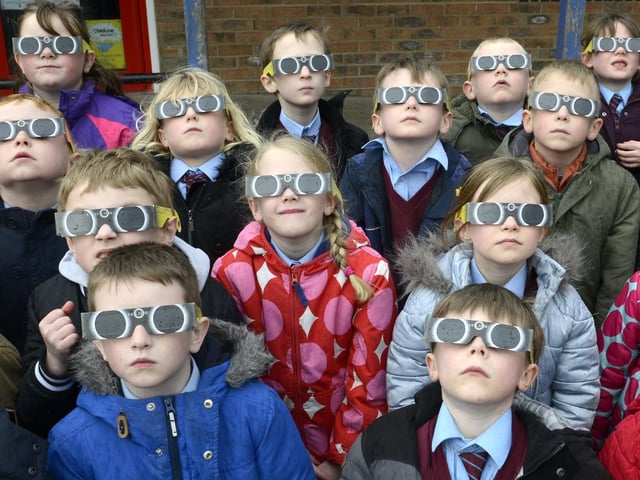
6. Holy Trinity, Berwick
Pupils at Holy Trinity First School in Berwick in their special glasses for watching the solar eclipse in 2015. Photo: Jane Coltman