
What's happening to all the old Tyne and Wear Metro trains
This month will mark the end of an era for the North East’s transport system, as the last of the Tyne and Wear Metro’s original fleet of trains are retired.
The final remnants of the Metro’s old fleet are due to make their final passenger journeys during the week of June 22.
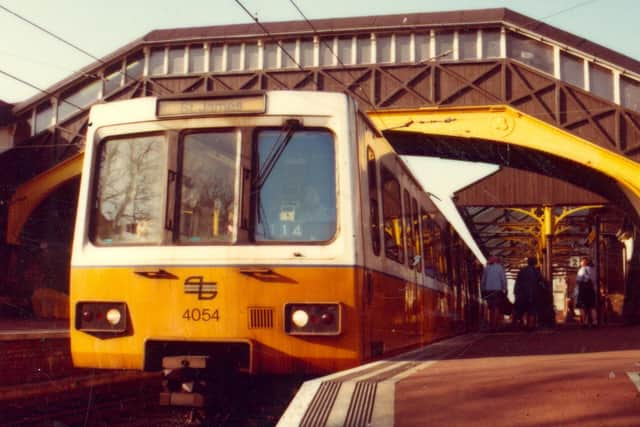

They have clocked up roughly half a billion kilometres in the 46 years they have served the North East, dating back to the opening of the rail network in 1980.
Recent years have seen them plagued by reliability problems, breakdowns, and struggles to find replacement parts, having been forced to run far beyond their expected 30-year lifespan.
But, as the transition to the Metro’s new Stadler trains nears completion, this month is set to be the end of the line.
The vast majority of the original 90 train cars are being sent to the scrapheap, with many already gone.
They are being sent to a specialist scrapyard in Bishop Auckland, where they are stripped of materials like copper and steel which can be sent for recycling.
A train can be completely broken apart in just under an hour and metals ripped from them have already been sent to countries including Spain, India, Turkey and Asia to be reused.
Two of the original fleet, however, will be retained as historical artefacts.
The network’s first ever train, Metro carriage 4001, has been donated to the Stephenson Steam Railway in North Tyneside.
Another was meant to be going to Beamish Museum in County Durham, but is now expected to go instead to another local museum.
Metro operator Nexus has donated another of the old fleet, which was built in Birmingham by train manufacturer Metro-Cammell in the 1970s, to the Tyne and Wear Fire and Rescue Service to use in firefighter training exercises.
And it is understood that a couple more may be retained to use for maintenance purposes on the Metro network.
They could be used to tow the specialist Rail Head Treatment Train sent out in the autumn to help clear leaves off the train tracks.
It had previously been hoped that some of the defunct carriages would be given to grassroots organisations across the North East and given a fresh lease of life – possibly as classrooms, community hubs, or trendy street food destinations.
But that idea was abandoned in 2023 due to concerns about the cost and logistics of delivering them.
Nexus told the Local Democracy Reporting Service this week that it was “not a justifiable use of public money”.
Michael Richardson, Nexus’ head of fleet and depot replacement, said: “The original Metro trains have served us well, but they are now close to being completely phased out.
“The week commencing 22 June will be the last guaranteed period that customers can travel on one. The bulk of the old carriages have been sent to a breaker’s yard where they have been recycled.
“Two trains have been kept for heritage purposes. The original Metro prototype has been donated to the Stephenson Steam Railway in North Tyneside. A second carriage will also be sent to another local museum, to be announced soon.
“Another was donated to the Tyne and Wear Fire and Rescue Service for their training facilities. In 2023, we had hoped to donate some carriages to local community groups, but this proved too complex and expensive – and not a justifiable use of public money.
“This was due to delivery arrangements, including cranes, extra heavy machinery or significant works to prepare sites for each train. We’re grateful to the community groups who took time to show an interest in this project.”