
Thousands volunteer to remove plastic pellets from beaches as North Tyneside council issue official guidance
Residents of north Tyneside and Northumberland have defied official advice to help clear up beaches to remove white plastic pellets.
It’s estimated that one billion of these small, white pellets, known as nurdles, have washed up on local beaches.
Beaches on both sides of the Tyne have been affected by this major spill, with around 1,000 residents across 11 beaches now taking part in clean up operations.
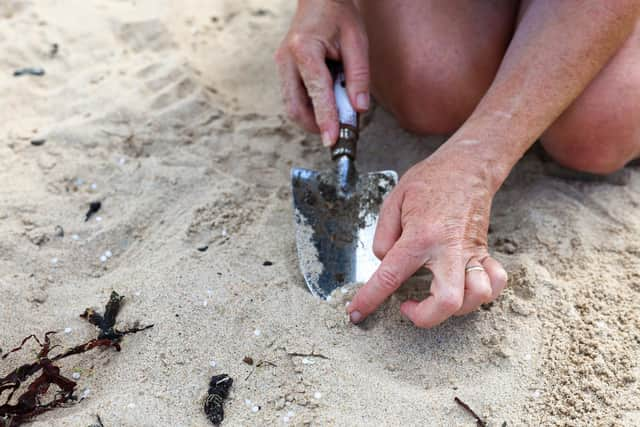
Earlier this week, volunteers began their clean up efforts by first sweeping the hard-packed sand along the tide line where the pellets accumulate, before using hand-sewn mesh bags and seawater to separate the floating plastic from the sinking sand.
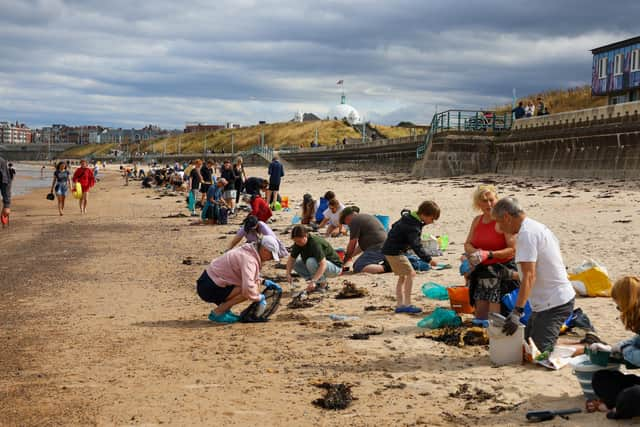

Others have shaken washed-up seaweed to release trapped pellets, while teams divide the beach into grids, clearing one section at a time to make the painstaking task feel manageable.
Whilst the plastic pellets themselves are not toxic, they readily absorb pollutants and chemicals from seawater.
They are also often mistaken for food by birds, fish and other wildlife, causing injury or death.
Despite official advice from North Tyneside Council stating that: ‘as a precaution, residents and visitors are being advised not to handle the pellets if they come across them and to keep dogs on leads when visiting affected beaches’, local residents such as Alice Laverty, co-owner of Keel Row Books in Whitley Bay, have taken it upon themselves to help begin the clean up of the beach.
“What made me realise I should get down there and start cleaning up was the contradictory advice we were getting from the council, which said we should avoid touching the nurdles but that the beaches were still safe to enjoy. Both can’t be true at the same time,” Alice said.
“There’s no nurdle fairy, this needs to be cleaned up now.
“An official response with specialist equipment and trained staff takes time, and concerns about insurance and liability could further delay clean-up operations.
“It can be uncomfortable being those first people on the beach with a dustpan and brush, but others see your actions and it gives them the sense that it’s okay to join in.”
Jen Stobs from Seaton Sluice added: “If we don’t clean it up, it’s going to be in our fish and chips supper.
“We’ve received two rolls of scaffolding nets from Baldwin scaffolding, and mesh, trugs and sieves from Cowell’s.
“It’s been about five years since I last used my sewing machine so it took me a while to thread it, but then I put some 90s rave music on and just got in the zone.
“I’ve made about 60 bags so far which will also eventually get reused by Nurdle UK for future beach clean-ups.”
North Tyneside Council have since released guidance on how volunteers can stay safe both during and after the nurdle clean up operations.
Guidance from the council stresses the need to wear gloves, suitable clothing, clean footwear and clothing once you exit the beach and to take any collected nurdles to the designated collection sites.
Collection points for nurdles can be found at Cullercoats Bay, King Edwards Beach, The Haven, Tynemouth Longsands and Whitley Bay.
For more information, visit North Tyneside Council’s website.