
Northumberland teen takes on fundraising challenge for Great North Air Ambulance after falling off her horse
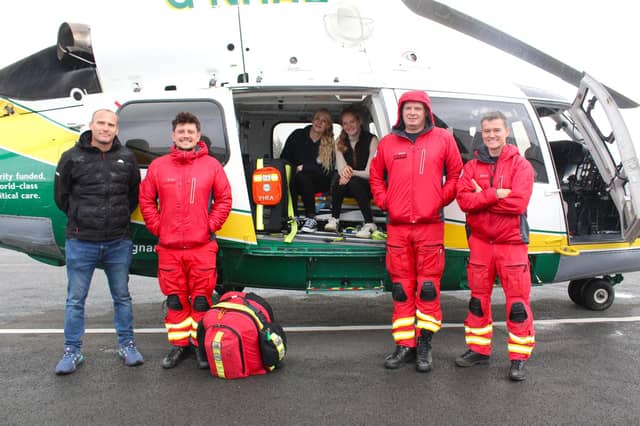

A teenager who suffered life-threatening injuries after a fall from her horse in Otterburn will be taking on a fundraising challenge in support of the air ambulance service.
Lucy Henderson, 18, from Hexham, has signed up to Miles4Missions, which is a virtual daily challenge where participants need to cover a distance in miles which reflects the number of missions responded to by the Great North Air Ambulance Service (GNAAS) the previous day.
The challenge starts in October and Lucy has signed up to aid her recovery as well as raise funds for the service that came to her rescue.
On June 20, Lucy was riding her horse Peapod when they had a rotational fall during a jump and unfortunately landed on top of her.
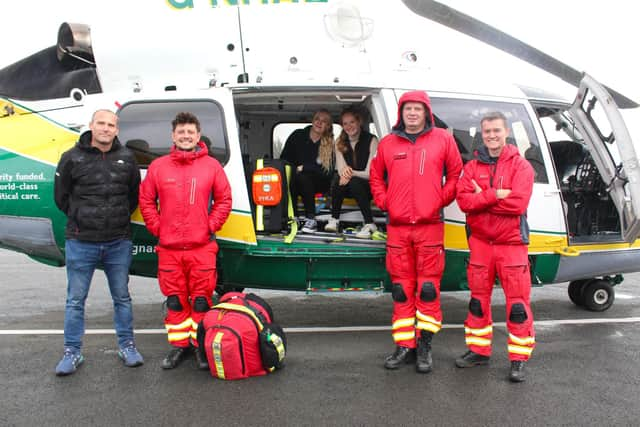
Lucy was in a lot of pain and sustained several serious injuries, which led to GNAAS and the North East Ambulance Service being called out to help her.
Lucy explained: “I was knocked out initially, but afterwards I can remember the majority of it. I remember hearing the helicopter and I thought, thank god for that, the drugs are on the way.”
Lucy was suffering internal bleeding, and had fractured her back, scapula, nose and six ribs, and took a chunk out of her lip.
Lucy travelled in a land ambulance to the Royal Victoria Infirmary (RVI) in Newcastle, accompanied by her parents.
Lucy said: “I was in resus for ages. I had lost a kidney, lots of internal bleeding that they were worried about, my bowel and pancreas were badly damaged, and I had nearly 90 percent bruising to my lungs.”
Lucy then spent a week on the high dependency unit before returning home to continue her recovery.
This was the second time Lucy had been in the RVI following a fall from her horse and also required the help of GNAAS’ critical care team.
In 2017, she was thrown off her pony and banged the side of her head. Thankfully she was relatively unscathed and was able to return to riding eight weeks later.
Lucy’s mum, Tracy said: “GNAAS is vital to rural places like ours. Honestly, it’s something no one could do without. The critical care team’s speed in reaching incidents is amazing, and their ability to access areas where ambulances can’t is so helpful.”