
Ecosystem Benefits of UK Oyster Farms
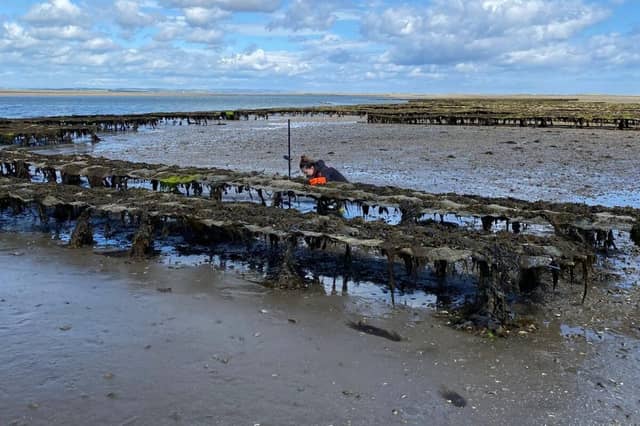

A project investigating the ecosystem benefits of oyster growing sites in England and Wales, funded by DEFRA and the Fishmonger’s Company, revealed minimal adverse environmental impacts from oyster farming. In some areas, seabed diversity was higher at oyster sites than in control areas, with the farms providing habitats that support marine life.
A recent study sheds light on the interaction of oyster farms with the surrounding marine environment. Conceived and led by a group of dedicated oyster farmers, the project aims to provide evidence for their lived experience of how their oyster farms can benefit the marine environment and leave the sea in a better condition by enhancing biodiversity and improving water quality.
Supported by the DEFRA funded Fisheries Industry Science Partnerships (FISP) scheme, with matched funding from the Fishmongers’ Company’s Fisheries Charitable Trust, the project, carried out by experts from Tethys Oysters Ltd., Northumberland-based company Envision Marine Ltd and University of Essex, evaluated the diversity of marine life at oyster aquaculture sites in comparison to control areas with no oysters.
Research conducted in 2023 focused on three Pacific / rock oyster farms and one naturalised Pacific oyster reef, as well as an historically significant native oyster farm that underwent commercial restocking efforts. Surveys included collection of underwater imagery, sediment samples, oyster dredging and ecosystem function testing.
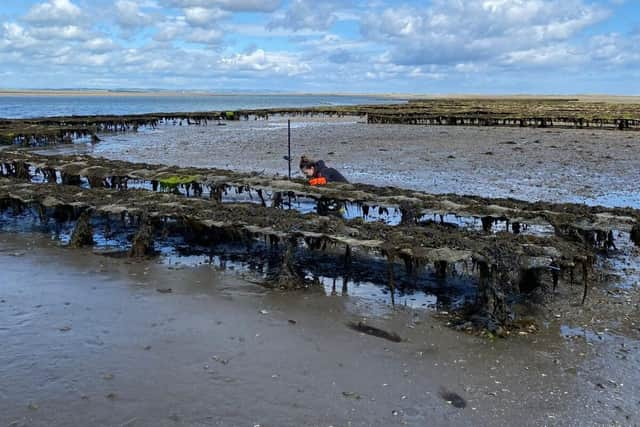
The findings revealed minimal adverse environmental impacts from oyster farming. In some areas, seabed diversity was higher at oyster sites than in control areas, with the farms providing habitats that support marine life. The farms also contributed to nitrogen cycling, essential for ecological balance, with microbial communities on oyster shells aiding in nitrogen compound breakdown. However, at historical native oyster sites, restocking efforst gave less demonstrable results, highlighting the need for continued restoration efforts.
The results provide further evidence that cultivation of oysters represents a sustainable method of producing high quality marine protein whilst providing employment and economic activity in coastal communities with a low carbon footprint.