
High street decline in Northumberland laid bare as shops and banks replaced by takeaways
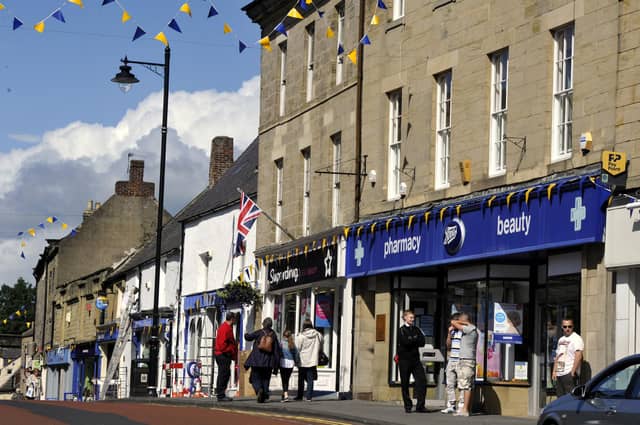

New figures have laid bare the deterioration of high streets across the North East.
Analysis published by Health Equity North has detailed the widespread closures of key community assets like banks, supermarkets, and public toilets – and their replacement by vape shops and takeaways.
The academics warned that the impacts of austerity, the Covid-19 pandemic, the rising cost of living, and changing spending habits over the last decade had combined to create more unsafe and unhealthy “ghost towns”, with the decline of the high street particularly stark in the North and other poorer areas.
They found that the number of banks and building societies has dropped by 40% nationally, and 57% in the most rural areas, and that the most deprived areas have suffered an average 38% drop in public toilets between 2014 and 2024.
Meanwhile, the number of vape shops increased by nearly 1200% in England in the same time period and takeaways by 24%.
The researchers, led by experts from Newcastle University and the University of Manchester, have called on the Government and elected mayors to help save “hollowed out” high streets by helping them adapt to the new needs of their local communities.
Detailed statistics show how every area across Tyne and Wear, Northumberland, and County Durham has suffered a notable decrease in department stores and banks.
The number of vape shops, by contrast, grew by more than 1,300% in some cases.
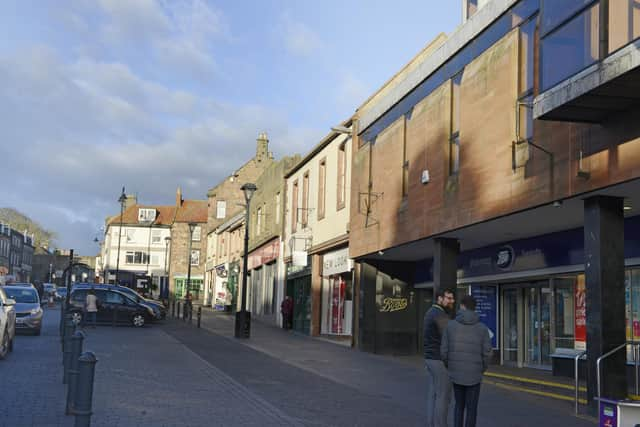
A breakdown of how high streets in Northumberland changed from 2014 to 2024, according to the Health Equity North research, reveals: 11.9% decrease in bookmakers; 19.9% decrease in alcohol-only outlets; 2.2% decrease in pawnbrokers; 2.5% decrease in pubs; 24.3% decrease in banks; 17.2% decrease in pharmacies; 10.5% decrease in supermarkets; 20.4% decrease in public toilets; 36% increase in takeaways; 19.2% decrease in department stores.
The report recommends that local councils be given more power to block “unhealthy” amenities from opening and for more investment to be put into new seating areas, public toilets and safe pedestrianised spaces to increase footfall.
Clare Bambra, academic co-director at Health Equity North and a professor of public health at Newcastle University, said: “Over the last decade, our High Streets have been hit by a devastating succession of shocks – from the impact of austerity to the COVID-19 pandemic. They’ve also been hollowed out by changing spending habits, and the rising cost of living.
“This trend has disproportionately affected the most deprived places in our country. The northern High Street now has fewer places to go to buy essentials, as well as fewer libraries, public toilets and other amenities and resources. The North has twice as many vape shops as the South, as well as more takeaway outlets and bookmakers.
“We know the Government is keen to build a greater sense of community in our towns and cities. Which is why we’re inviting them to commit to helping create more vibrant and social High Streets.
“You should be able to walk down a High Street, and feel the uniqueness, culture and identity of that community. Through innovative design, better public transport, and measures that promote people over cars, we can re-think these spaces so they become ‘go-to’s’ rather than ‘ghost towns’.”