
Forestry Commission chair Baroness Young visits EGGER Hexham site
EGGER welcomed the new Forestry Commission chair to Northumberland to discuss sustainable manufacturing, productive forestry and regional employment.
The newly appointed chair Baroness Barbara Young, accompanied by colleagues from Forestry England, visited the EGGER Hexham plant on Thursday, April 16.
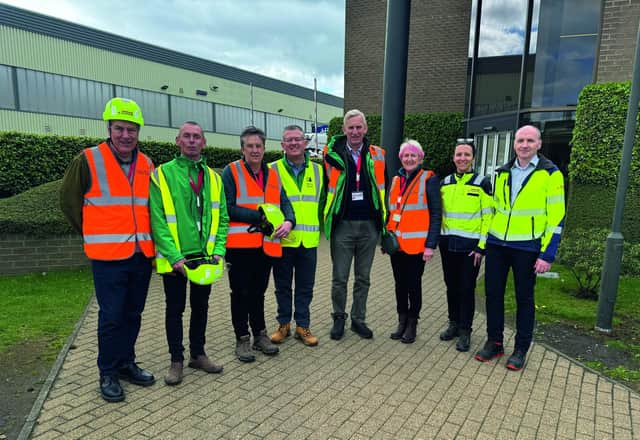

The visit prompted constructive discussions on how strong partnerships between the timber industry and regulatory bodies can support sustainable forestry, regional employment, and local economic development.
Baroness Young was welcomed by Max McLaughlan, head of EGGER Forestry, and Elfriede Bretterklieber-Taye, plant director for production.
During the visit, Max presented EGGER’s business model and the central role that sustainably grown timber plays in the manufacture of wood-based panel products.
He said: “EGGER is heavily invested in manufacturing a highly sustainable product. We use large quantities of recycled wood in our panel boards, as well as timber from local forests, so it’s great to welcome representatives of the organisations that manage and regulate woodlands.
"We spent an engaging morning at our Hexham plant introducing Baroness Young and colleagues to our business and outlining how we use sustainably grown timber.”
The timber used at EGGER is sourced from managed forests where harvesting and replanting is underpinned by a plan approved by the Forestry Commission.
Forest plans outline when trees can be harvested, what species should be planted, and how the long-term sustainability of the woodland will be secured.
Much of the productive forest resource is focused on fast-growing conifers, which have the benefit of absorbing large amounts of carbon dioxide over relatively short timescales. This maximises the amount of CO₂ that is removed from the atmosphere and locked up in useful timber products.
EGGER’s production operates on a closed-loop model, in which sustainably sourced wood is used efficiently, transformed into durable products that store carbon, and recycled at the end of their life.
This approach prioritises carbon capture through manufacturing wood-based products, resulting in fewer emissions than more carbon-intensive uses, such as burning wood for energy.
Max underlined the significance of the timber processing industry to the north of England’s economy. In Northumberland, many hundreds of people are employed in timber-related roles, spanning sourcing, manufacturing and recycling.
A key theme of the discussion was the close link between multipurpose forest management, including timber production, and the value of continuing partnerships between EGGER and public forests.